Last updated November 23, 2026
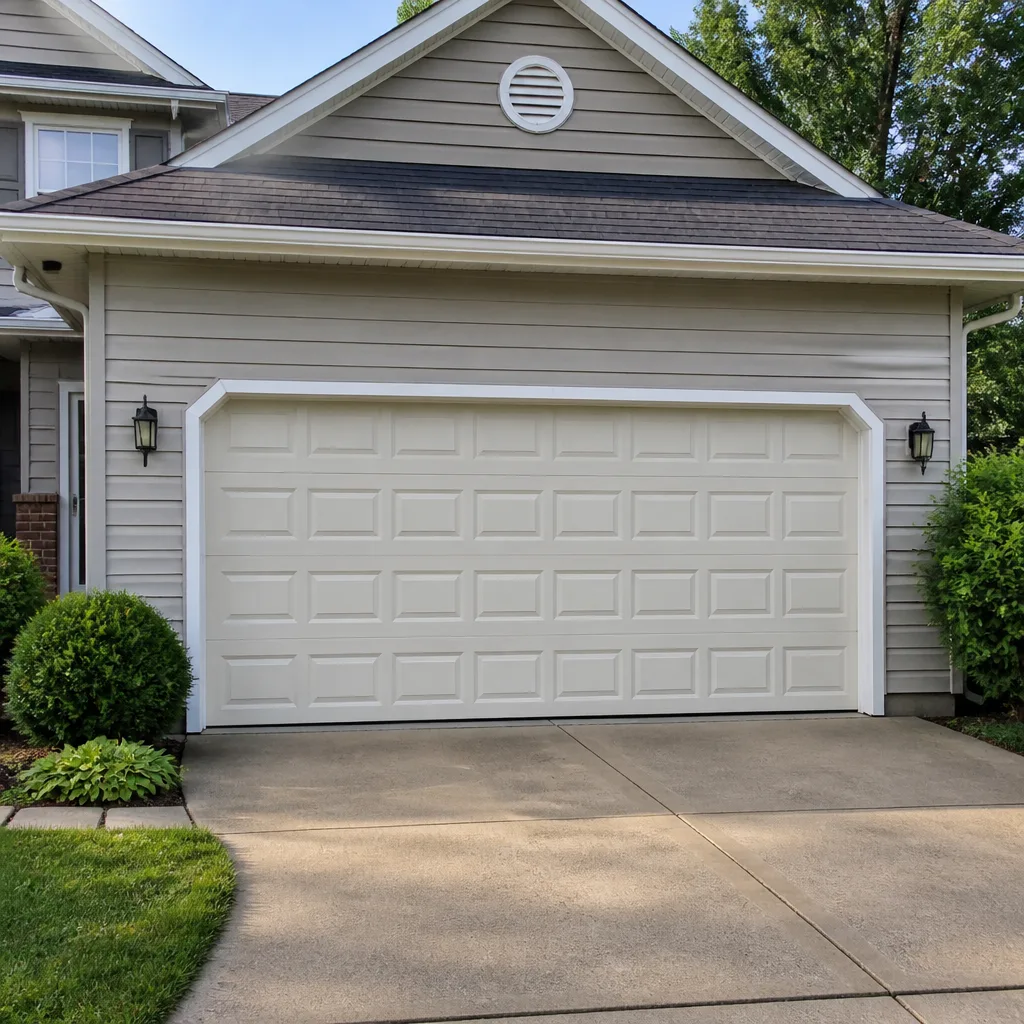 Raised-panel steel
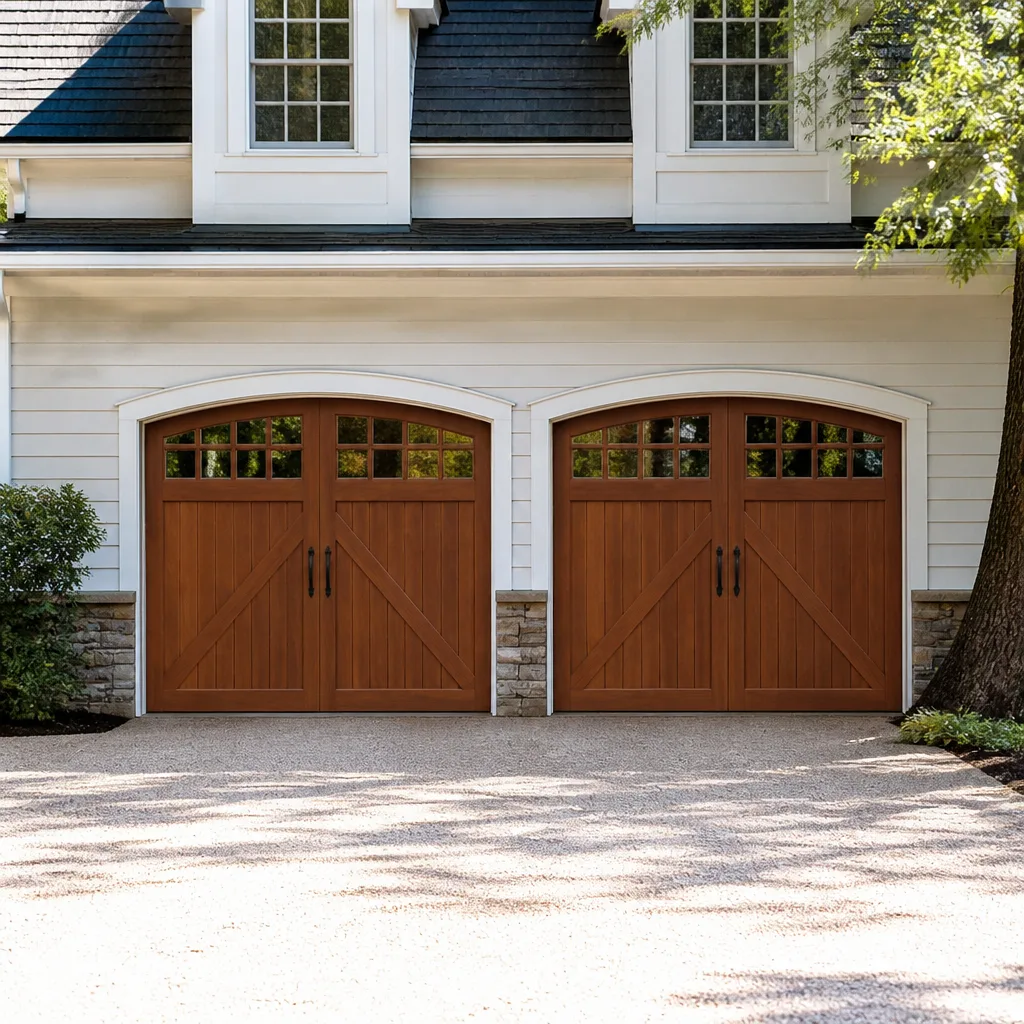 Carriage house
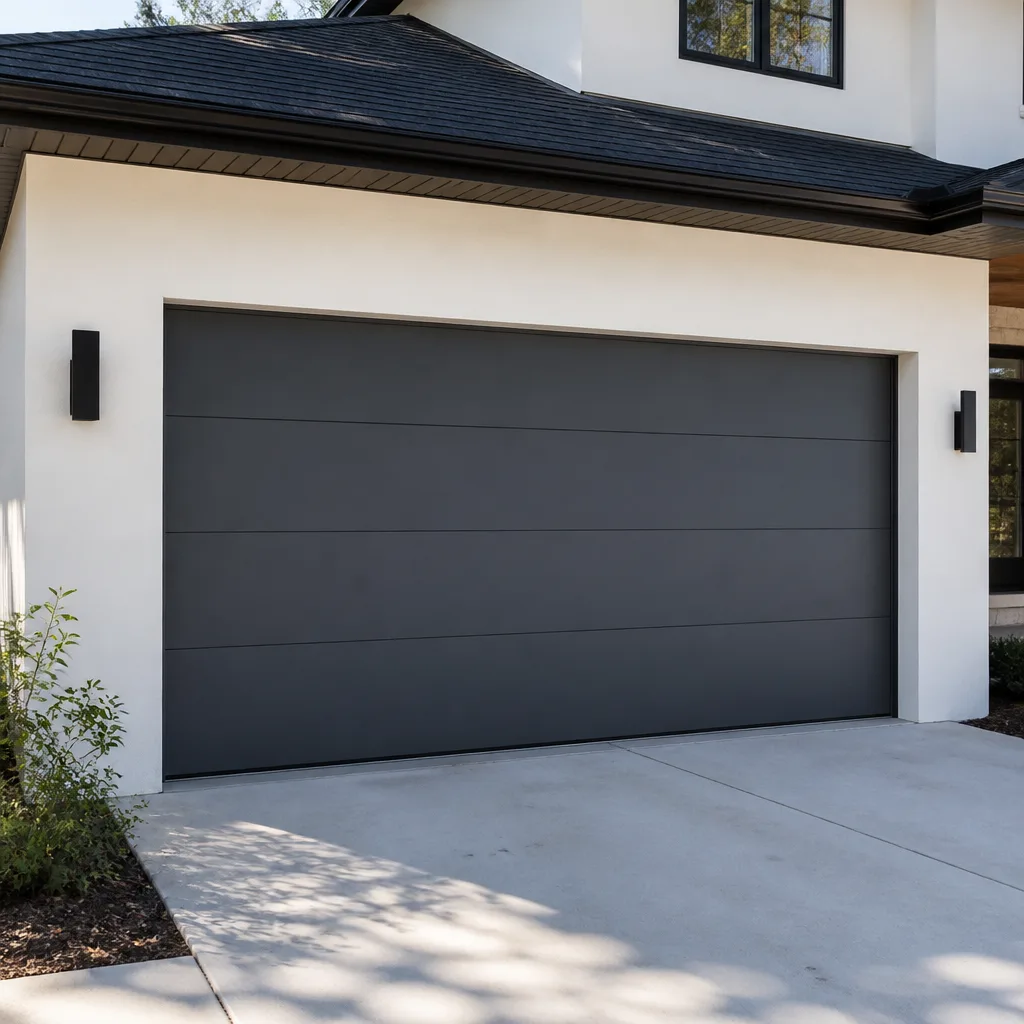 Modern flush
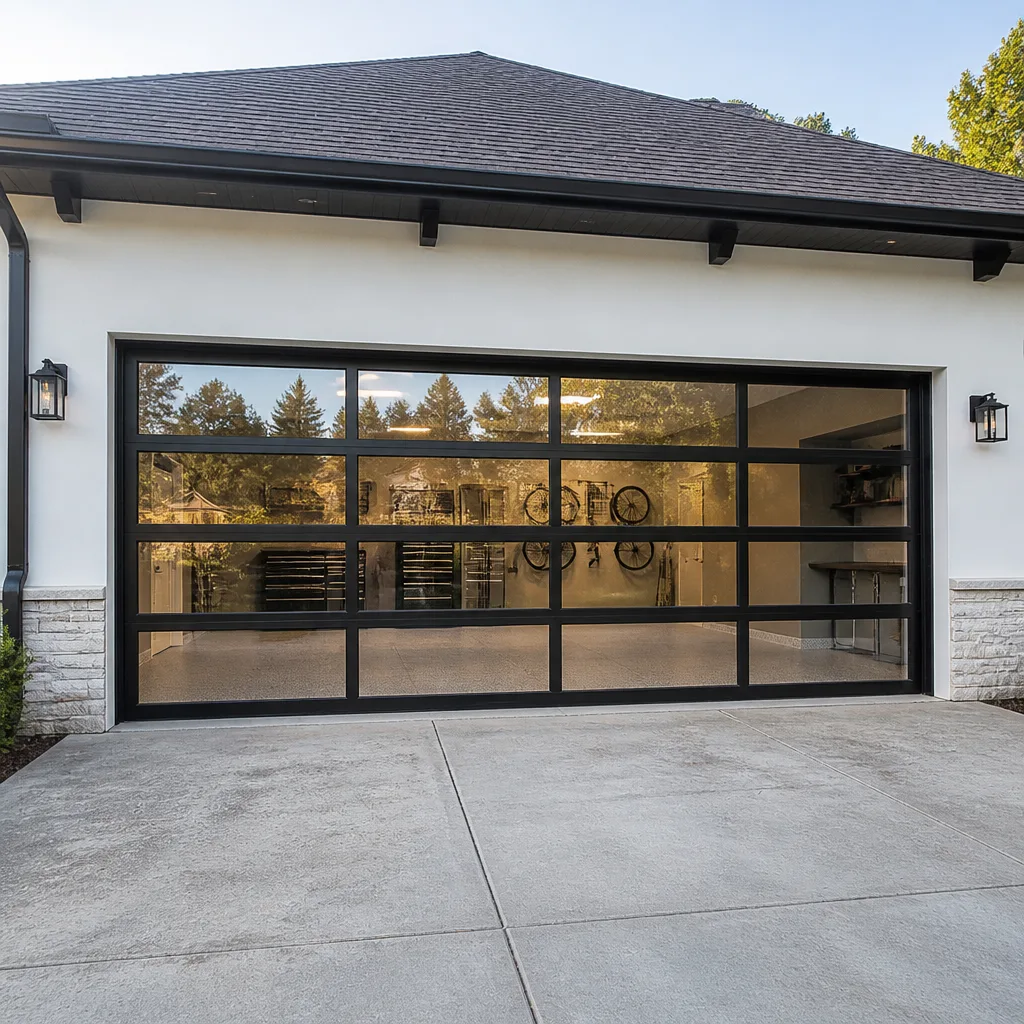 Full-view glass
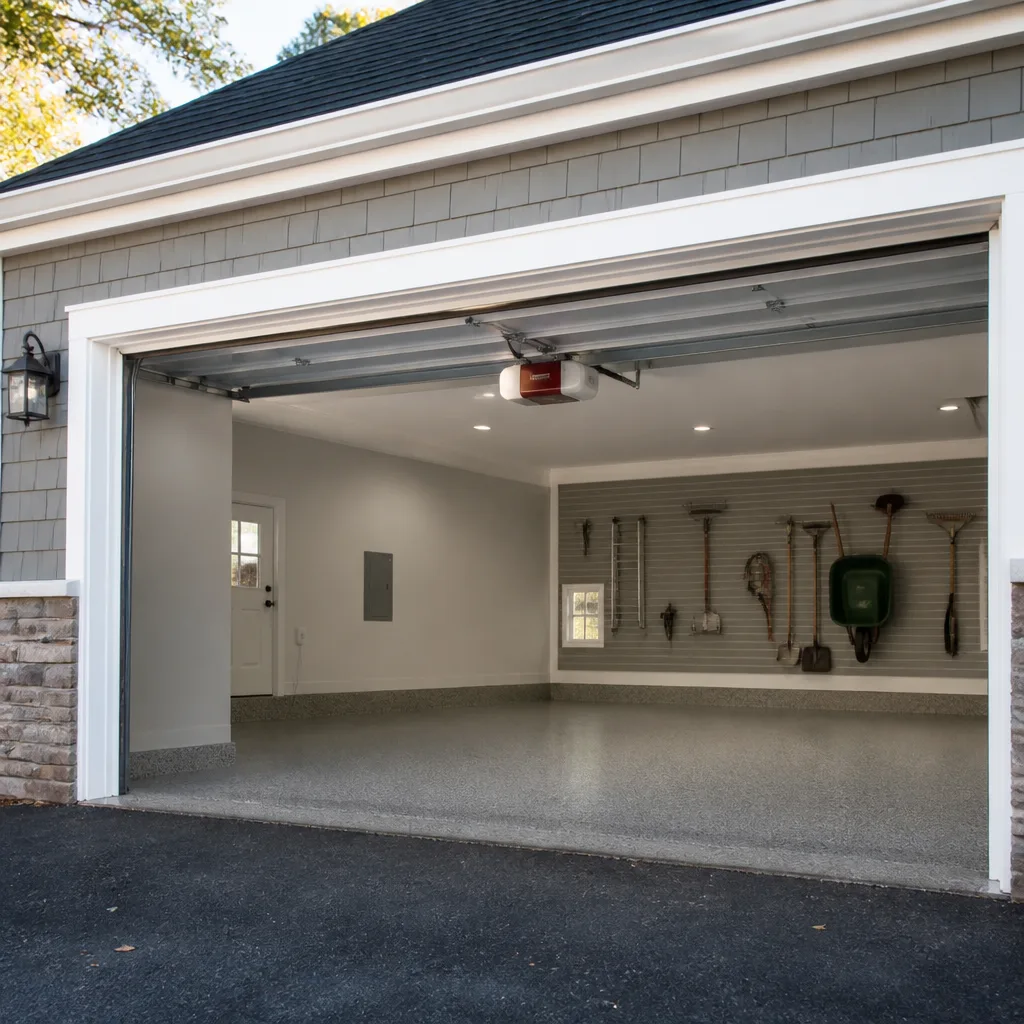 LiftMaster openers
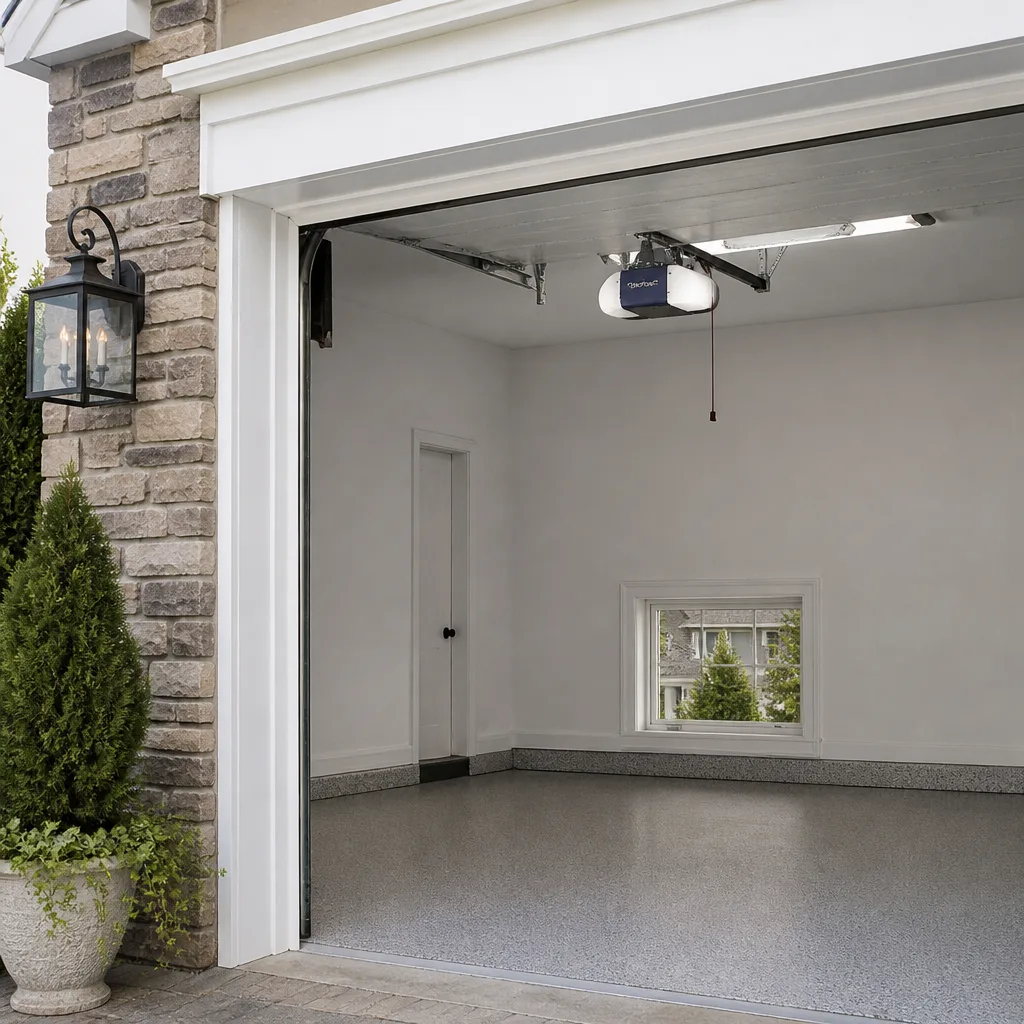 Chamberlain openers
Full 25-point door and opener safety check with every visit - springs, cables, rollers, tracks, and your LiftMaster or Chamberlain opener included
You get a price before we start. It does not change when the pro arrives.
Get your free estimateGarage Door Emergency Preparedness Guide for Midtown Homes
Most homeowners think a garage door emergency means a broken spring. In our experience, the far more common 11pm call in Midtown is something quieter and more avoidable: a power outage, a car trapped behind a door that won’t budge, and a homeowner who has never once touched the manual release cord. The hardware usually isn’t the problem. The lack of a plan is. This guide is about building that plan before you need it. We’ll walk through manual release on the opener types you actually find in Midtown homes, what to do when a door jams open, how to prep for outages, how to handle a storm, and how to vet an emergency technician in the time it takes to brew coffee. Read it once now, and a bad night gets a lot less bad.
Quick Answer
The core of a garage door emergency plan in Midtown is knowing your manual release: locate the red cord, understand how your specific opener’s trolley disengages, and test it while the power is on. If a door is stuck open, secure the opening and keep people clear of a tension-loaded door rather than forcing it down. For a snapped spring, a door hanging off its tracks, or anything involving high-tension hardware, call a professional rather than improvising. A little prep turns a panic into a fifteen-minute fix or a scheduled repair.
Styles & brands we work with
- Raised-panel steel
- Carriage house
- Modern flush
- Full-view glass
- LiftMaster openers
- Chamberlain openers
Table of Contents
- Why a Stuck Door Is Rarely Just About the Door
- How to Operate the Manual Release on the 4 Most Common Openers
- What to Do When the Door Is Stuck in the Open Position
- Power Outage Prep: Battery Backup and Testing Your Release
- Storm Event Protocol for Midtown
- Springs and Cables: The Parts You Should Never Touch
- How to Vet an Emergency Provider at 2am in Under 3 Minutes
Why a Stuck Door Is Rarely Just About the Door
A garage door failure is really three problems wearing one coat. The first is access: a door stuck down can trap your only car, and if your garage is attached, it can also be the door you rely on to get out. The second is security: a door stuck open at night leaves an entire wall of your home exposed to the street. The third is the door itself, which may be sitting on loaded springs and a bent track, waiting to do something worse than simply not opening.
We see all three kinds of trouble in Midtown because of how the neighborhood’s housing is built. Many homes here have an attached single or double garage that faces an alley or a shared driveway, so a jammed door isn’t just a private nuisance. It blocks the alley, and it can stop a neighbor from getting out too. When a mechanism fails, the failure ripples through the whole property.
That’s why preparedness has to cover more than “who do I call.” It covers what you do in the first fifteen minutes, before anyone arrives:
- Know your exit plan if the garage door is the primary way in and out of the house.
- Know the security stakes if the door is jammed up and the street can see in.
- Know your hardware, meaning the opener brand and whether it has a battery backup, so you can describe it accurately on the phone.
This guide treats each of those as its own problem, because they each have their own solution. Get them sorted now, in daylight, and you won’t be solving them in the dark.
How to Operate the Manual Release on the 4 Most Common Openers
The manual release is the single most important piece of garage hardware most people never think about. It’s a cord with a handle, usually red, that disconnects the door from the opener’s motor-driven carriage so you can lift the door by hand. When the power dies, it’s the difference between a trapped car and a normal morning. The tricky part is that the release mechanism differs between opener types, and pulling the wrong thing the wrong way can damage the trolley, the carriage, or the door arm.
1. LiftMaster and Chamberlain (and most Craftsman openers)
These share the same basic center-rail design. The manual release cord hangs from a trolley on the rail, and pulling it disengages the carriage so it slides freely. The common mistake is grabbing the cord while the door is already moving under power. Always let the door come to a full stop first. Pulling a live trolley under load can strip the trolley or bend the door arm.
2. Genie openers
Genie uses a similar pull-cord disengagement, but the carriage sits differently on the rail and can be stiffer on older units. Pull straight down in a firm, steady motion rather than yanking at an angle. If it won’t release, the carriage may be jammed; forcing it sideways is what bends components.
3. Belt-drive smart openers (LiftMaster, Chamberlain, Genie)
Modern Wi-Fi and smart openers still use a manual release, but many add a lockout feature or a door-lock solenoid. If the opener has a lock engaged, you may need to disarm it before the release will work. Check the opener’s manual or app before a power event so you’re not guessing.
4. Legacy Craftsman and older chain-drive units
Older chain-drive openers use the classic trolley pull cord, but the plastic trolley components can be brittle. On these, pull smoothly and don’t let the door ride up fast and slam the carriage. The rule across every type: stop the door, pull straight down, and guide the door by hand rather than letting it fly.
Whatever you drive, the safest time to learn this is now. Open the door, walk out, and look at the release cord with the light on. That’s the test run.
What to Do When the Door Is Stuck in the Open Position
A door stuck open is the scenario people underestimate, because it feels less urgent than a door that won’t open. It isn’t. An open door is an open wall, and if it’s hanging off a track or resting on loaded springs, it can also drop. The goal in the first minutes is to stop further movement and secure the opening without making a bad situation worse.
Here’s the sequence we recommend:
- Keep people and cars out from under it. A door that’s jammed open may still be under tension. Don’t park beneath it and don’t let anyone walk under it.
- Don’t force it down. Pushing a misaligned door down can bend the panels, snap a track bracket, or drop the door onto whatever is below.
- Secure the opening if it can be done safely. If you can reach the manual release and the door operates smoothly by hand, lower it gently and lock it. If not, block the opening from the inside with what you have and keep the space closed off.
- Assess the tracks. If a track is bent away from the door or a roller has jumped out, the door is no longer fully supported. Leave it exactly where it is and call a professional.
- Decide: call or wait. If it’s daytime, the door is stable, and nothing is exposed, you can schedule a repair. If the door is jammed open at night, if it’s resting badly on its springs, or if the opening can’t be secured, treat it as an emergency.
In Midtown, where garages often open onto shared space, an unstable door also poses a risk to neighbors and their vehicles. That tips the call-versus-wait decision toward calling. A stable door on a safe track can wait for a morning appointment; a door that’s leaning, hanging, or blocking a shared driveway should not.
Power Outage Prep: Battery Backup and Testing Your Release
Most power outages don’t announce themselves, and the first thing you notice is that the opener won’t respond. Battery backup is the feature that turns a two-hour outage from an emergency into an inconvenience, so it’s worth checking whether your opener has it and whether it’s actually working.
Battery backup availability depends on the opener model and brand. Many current LiftMaster and Chamberlain openers offer a backup option built in or as an add-on, and some Genie models do as well. Older chain-drive and legacy Craftsman units usually don’t. Rather than guess, look at the opener itself or its manual and see whether a backup battery is supported. If it is, test it: unplug the opener from the wall and see whether the door still opens. A backup that’s never been tested is a backup you don’t actually have.
Then test the manual release before you need it under pressure. Do this with the power on and the door fully closed and stopped:
- Stand clear of the door’s path and locate the release cord.
- Pull straight down to disengage the carriage.
- Lift the door by hand partway and let it settle to confirm it’s disconnected and safe to move.
- Re-engage the carriage by running the opener or the release, then confirm the door operates normally under power.
If the door is very heavy to lift by hand, the springs may be losing tension. That’s a sign to get the door looked at now, while you still have control over the timing. In Midtown’s older homes, springs that have never been serviced are worth a professional inspection.
Storm Event Protocol for Midtown
Storm season turns garage door questions into real decisions, and the honest answer is that the right move depends on the kind of door and the kind of damage. For the typical well-maintained door in Midtown, leaving it fully closed through a storm is almost always the correct choice. A closed door braces itself against wind and keeps debris and rain out of the garage.
The exception is a door that’s already been damaged. If a panel is cracked, a hinge is bent, or the door is hanging unevenly, wind pressure can push a compromised door further out of alignment, buckle a panel, and in the wrong situation drop it toward whatever is parked in the garage. Here’s the protocol we recommend:
- Door is sound: keep it down through the storm. Don’t open it to check the weather.
- Door is cracked or misaligned: get it inspected before storm season, and don’t operate it during high wind. A damaged door that’s opened is a door that can collapse.
- Door is already damaged and closed: leave it closed and locked, keep vehicles out of the garage if a panel could fall, and call for a repair rather than forcing it open.
- Door damage has exposed the opening: treat it as a security problem and an access problem at once. Secure what you can safely and call for emergency service.
One caution that matters: never “hold up” a damaged door by hand or prop a bent panel open during wind. A tension-loaded door isn’t meant to be braced by a person. Keep people out from under it and let a trained technician take it apart in a controlled way. Clopay and Amarr doors, which are common in Midtown, are sturdy but not meant to be field-repaired under load.
For the mechanics of getting a door fixed once the storm has passed, you can review our garage door repair options and call to schedule an inspection before the next front moves in.
Springs and Cables: The Parts You Should Never Touch
Torsion and extension springs and the cables that run with them are the parts of your garage door that store the energy to lift hundreds of pounds. When one fails, it usually fails with a bang. This is the one category of garage door problem where the right move is to stop and call a professional, full stop. We’re not going to give you a step-by-step on replacing a spring, because it’s genuinely dangerous work that requires the right tools, the right technique, and knowing exactly how much tension is stored. A person who tries it at home is a person at real risk of serious injury.
What you can do is recognize the signs:
- A loud bang from the garage followed by a door that won’t lift.
- A visible gap in a torsion spring over the door.
- A door that’s suddenly very heavy to lift by hand.
- A door that lifts unevenly or tilts to one side.
- A cable that’s hanging loose, off its drum, or frayed.
Any of those means the door is no longer safe to operate. Leave it closed if you can, keep it clear, and call. Spring repair is a specialty that has to be done with the door under control, and we handle it as a dedicated service rather than a quick workaround. If you want to understand what gets fixed, you can connect with Garage Door Repair Midtown and describe what you’re seeing; the first priority is making sure the door is safe.
Our technicians have up to 14 years of experience, and they work on the brand already in your garage, whether that’s a Craftsman chain-drive unit in an older Midtown home or a newer smart opener with a clipped spring.
How to Vet an Emergency Provider at 2am in Under 3 Minutes
It’s 2am, the door is jammed, and you’re calling the first company that answers. That’s exactly the moment price-gouging storm chasers count on. You can filter a bad provider from a real one in under three minutes with a few direct questions, and the right answers are short and specific.
Ask these five questions, in this order:
- “Can you describe the likely fault before you arrive?” A real technician can ask two or three diagnostic questions (brand, opener type, is the door hanging) and give a working theory. A call-center reading a script won’t.
- “Which brands do you service?” You want a provider who works across major systems, not one that only handles a single brand and pushes you toward a replacement. Our technicians service eight major brands, including LiftMaster, Chamberlain, Genie, Clopay, Amarr, Wayne Dalton, Craftsman, and Raynor.
- “Is the price quoted and agreed before work starts?” The answer you want is yes. A provider who won’t commit to a written quote before touching the door is a provider to hang up on.
- “Are you licensed and insured as required in your state?” A real provider answers clearly. A storm chaser dodges it.
- “What’s the estimate for the situation I described?” A legitimate provider gives a range over the phone and puts the firm number in writing before the work begins.
If something feels off, get a second number. A legitimate business won’t pressure you off the phone or demand payment up front before anyone has seen the door. And if the problem is with the opener rather than the door, our garage door opener repair service handles both mechanical and smart-connectivity failures.
Once you’ve picked a provider, the next step is often simpler than you fear. Many issues that look like a full replacement are a repair, and we can help you decide when a repair has become a garage door installation instead.
Common Mistakes to Avoid
- Yanking the release cord while the door is moving. Pulling a live trolley under load can strip the trolley or bend the door arm. Stop the door first, every time.
- Assuming your opener has battery backup without testing it. A backup that’s never been tested is a backup that fails when you need it most, and outages in Midtown don’t wait for a convenient moment.
- Forcing a stuck door down or up. Pushing a misaligned door can buckle panels, snap track brackets, or drop the door. Call a professional instead.
- Propping open a damaged door during storm wind. A bent panel held up by hand is a hazard. Keep everyone clear and let a technician take it down safely.
- Skipping the brand question when calling. Your opener’s make and model change how it’s diagnosed. Knowing whether you have a Wayne Dalton or a Genie saves time and avoids a mismatched repair.
- Calling an unvetted service in a panic. A provider who won’t give a written quote before arriving, or who pushes a full replacement sight unseen, is one to avoid. Ask the questions.
- Never testing the manual release. The worst time to learn how your release works is the first time you actually need it. Do a dry run now, in daylight.
See the difference
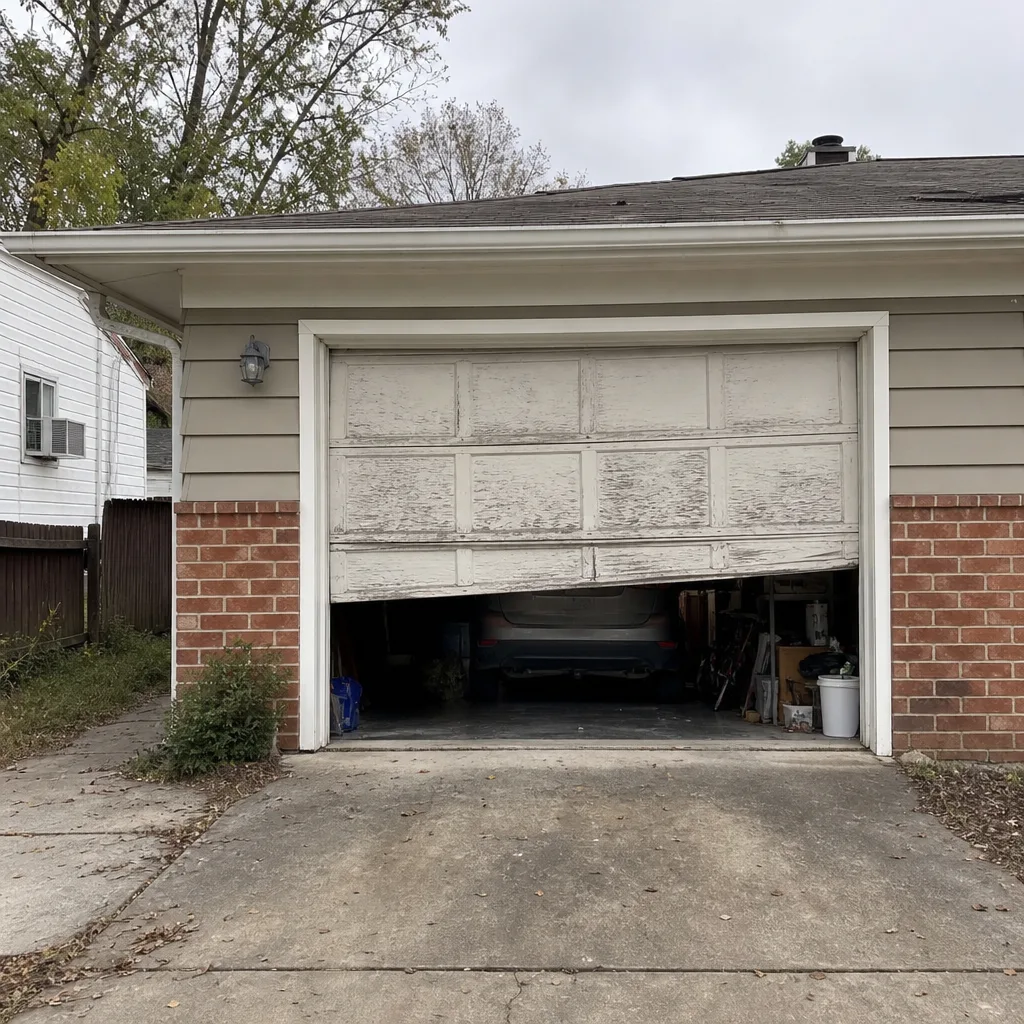 Before
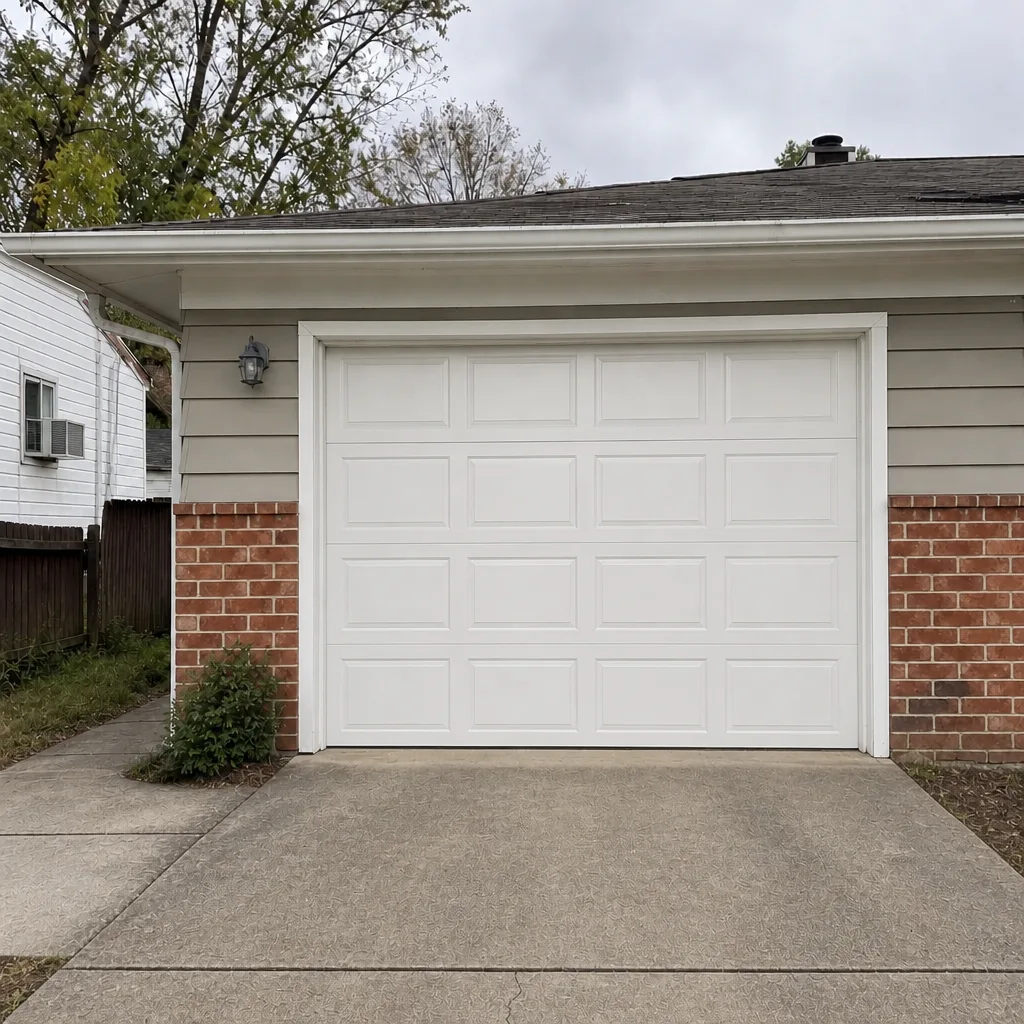 After
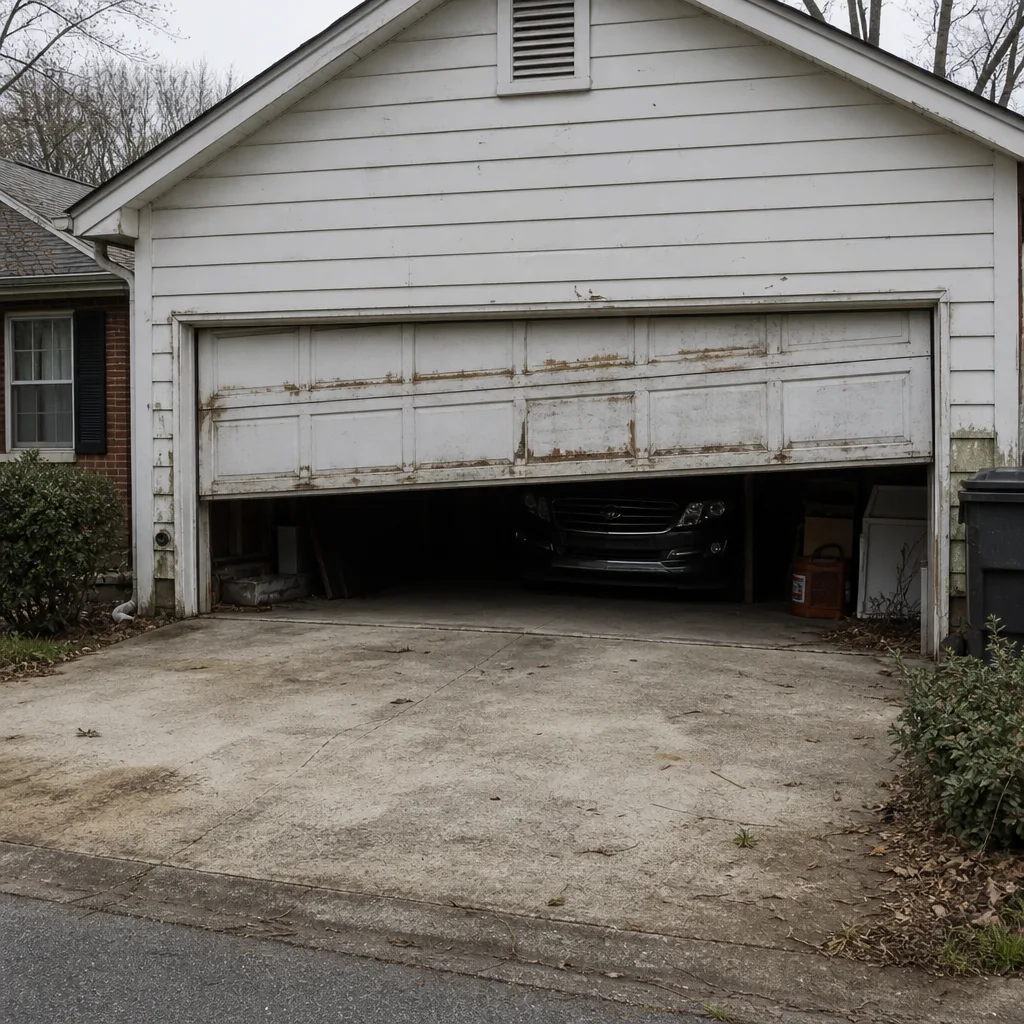 Before
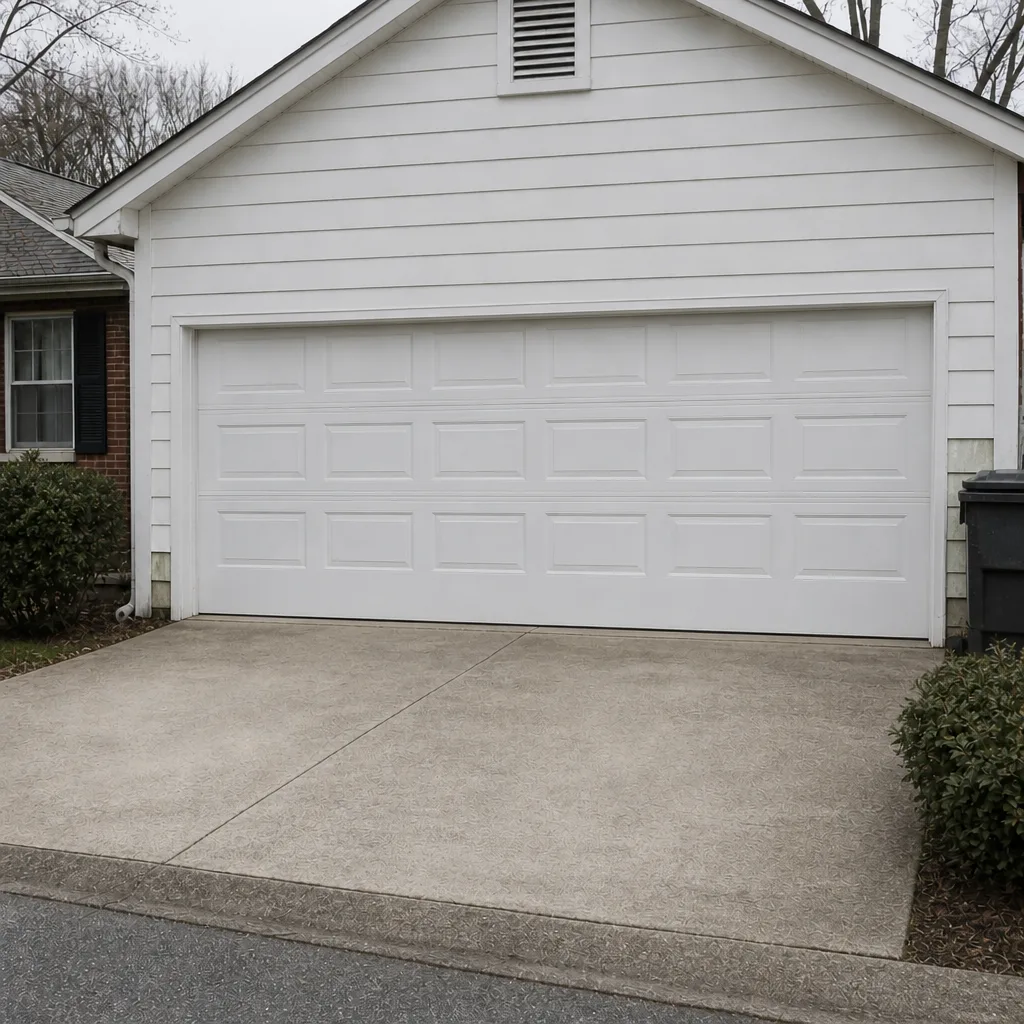 After
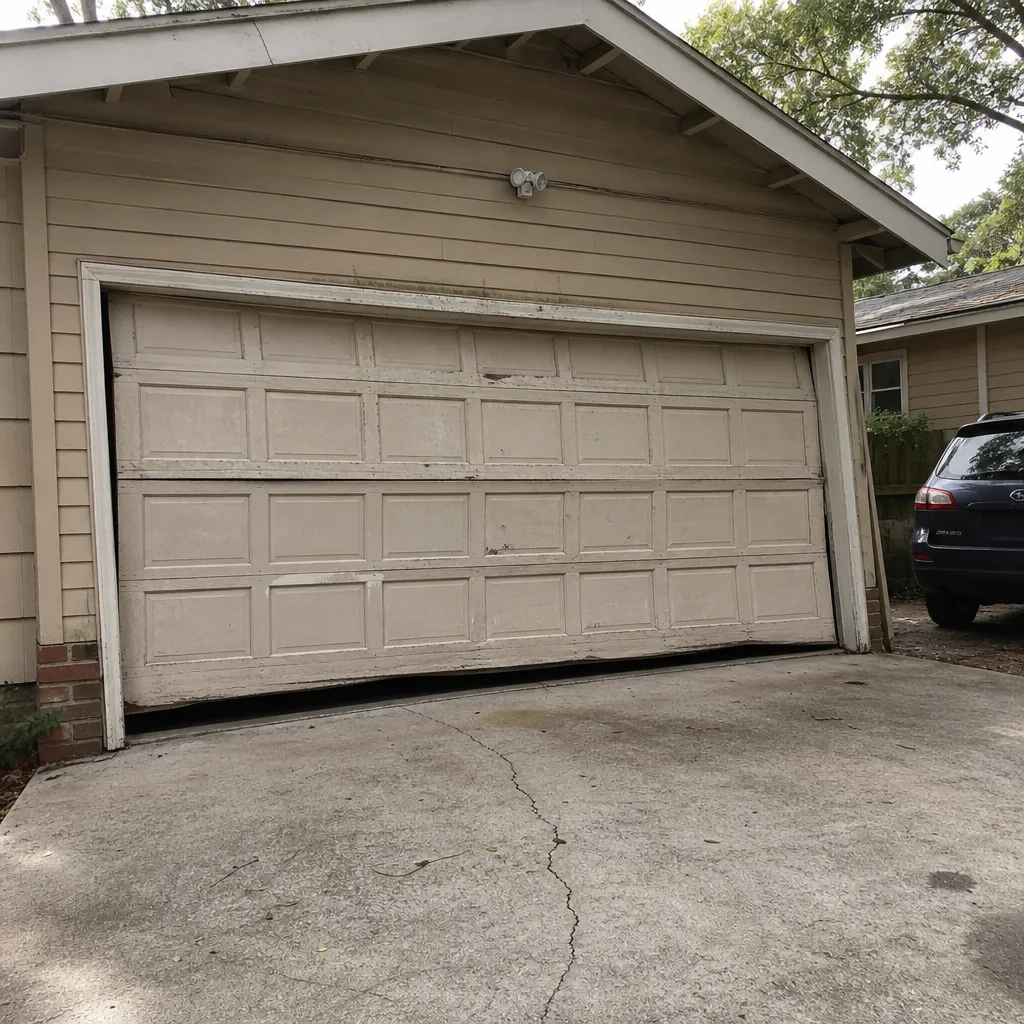 Before
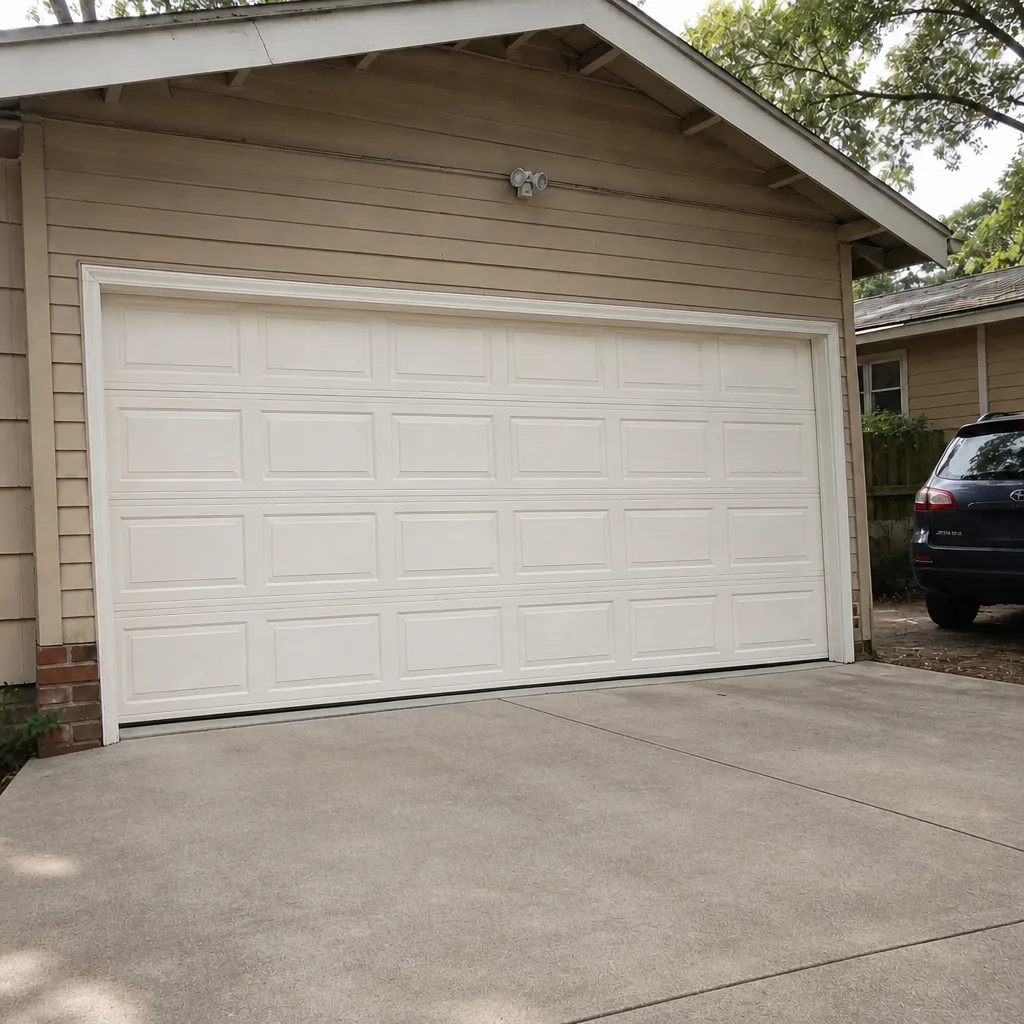 After
When to Call a Professional
Some garage door problems are a nuisance you can schedule around. Others need a technician now. Call a professional if a spring has snapped, a cable is hanging loose, or a door is resting badly on its tracks; if the door won’t close and the opening can’t be secured; if a panel is cracked and the door is at risk of collapsing under storm wind; or if a jam is blocking a vehicle and you can’t resolve it safely. If a door is simply stuck because the power is out and your release is working, you may not need a call at all, just a plan for the morning. Garage Door Repair Midtown offers free estimates in Midtown. Call (833) 700-6163 for emergency help or to schedule an inspection. Our team works across Clopay, Amarr, Wayne Dalton, Craftsman, and the other major brands, so the person on the phone already knows what’s in your garage.
Frequently Asked Questions
Use the manual release cord, usually red, to disconnect the door from the opener, then lift it by hand. Stop the door before pulling the cord, and pull straight down rather than at an angle. Every opener type in a Midtown home uses a version of this release, so find yours now and practice once while the power is on.
No, and it’s genuinely dangerous to try. Garage door springs store a large amount of tension and can cause serious injury if released incorrectly. Leave a snapped spring or a loose cable alone, keep people out from under the door, and call a trained technician. This is the one repair we never suggest a homeowner take on.
Keep people and cars clear of the door, don’t force it down, and secure the opening only if you can do it safely. If the door is stable on its track and can be closed by hand, close and lock it. If it’s hanging or misaligned, call a professional rather than risk a collapse. In Midtown, a door stuck open onto a shared alley is also a security concern for the block.
Check the opener or its manual for a backup battery that keeps the door working during an outage. Many current LiftMaster and Chamberlain openers support it, and some Genie models do too, while older chain-drive units usually don’t. The real test is to unplug the opener and see if the door still moves.
For urgent failures, yes, we offer same-day and emergency service for situations where a non-functional door is a safety or security risk. For a spring repair, opener repair, or full installation, we’ll measure and schedule the work and give you a written price before anything starts. Call (833) 700-6163 and describe the problem so we can tell you what’s realistic.
In most cases, yes. We service eight of the most widely installed brands in North America, including Clopay, Amarr, Wayne Dalton, Craftsman, LiftMaster, Chamberlain, Genie, and Raynor, so our technicians arrive familiar with your hardware. If you’re not sure of your brand, tell us the model and we’ll confirm before we come out.
The Bottom Line
Garage door emergencies in Midtown are rarely about a piece of hardware nobody could have predicted. They’re about the fifteen minutes before help arrives, and most of those minutes go wrong because the homeowner has never touched the release cord or checked the battery backup. Learn your opener’s manual release, test it in daylight, know the difference between a stable stuck door and a dangerous one, and keep a short vetting script for an emergency call. Do that once and the next midnight call becomes a quick fix or a scheduled repair instead of a scramble. When you do need help, call (833) 700-6163 for a free estimate.
Written by the team at Garage Door Repair Midtown.