Last updated November 23, 2026
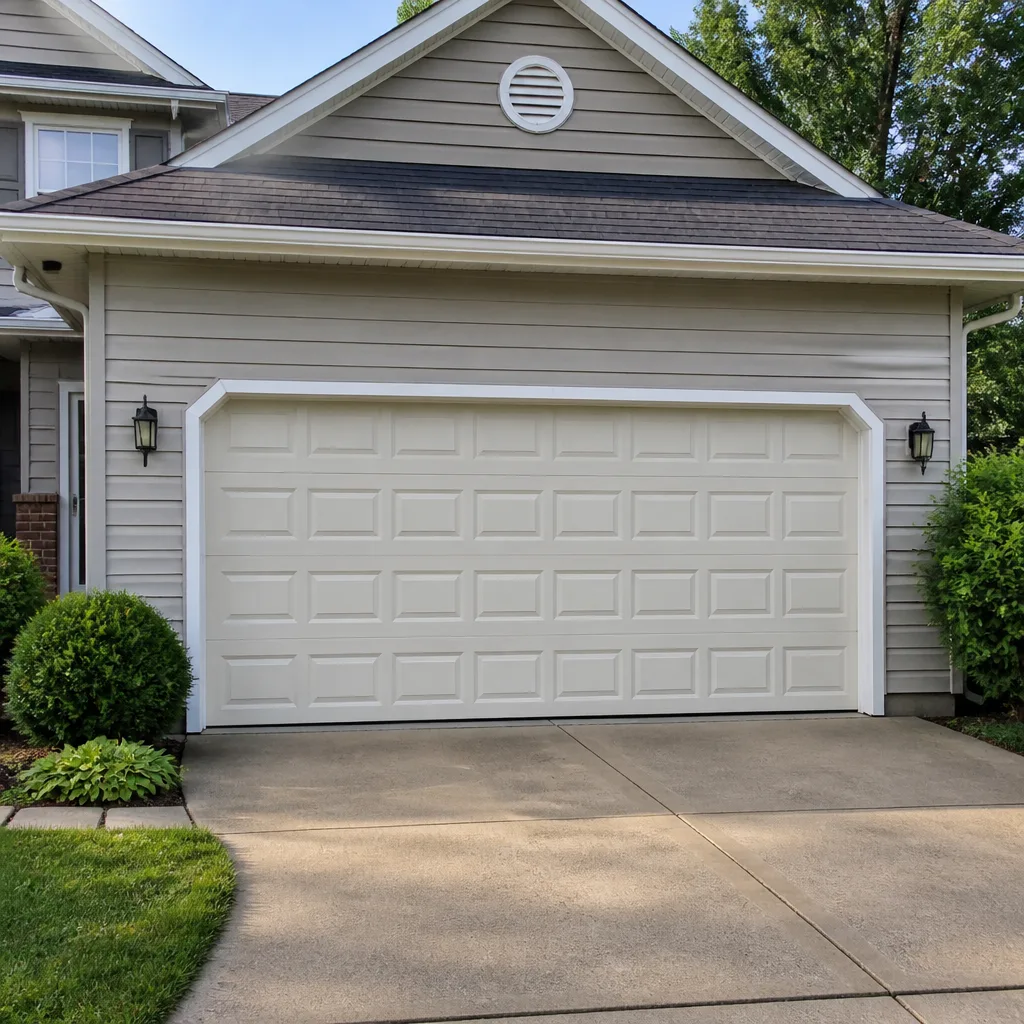 Raised-panel steel
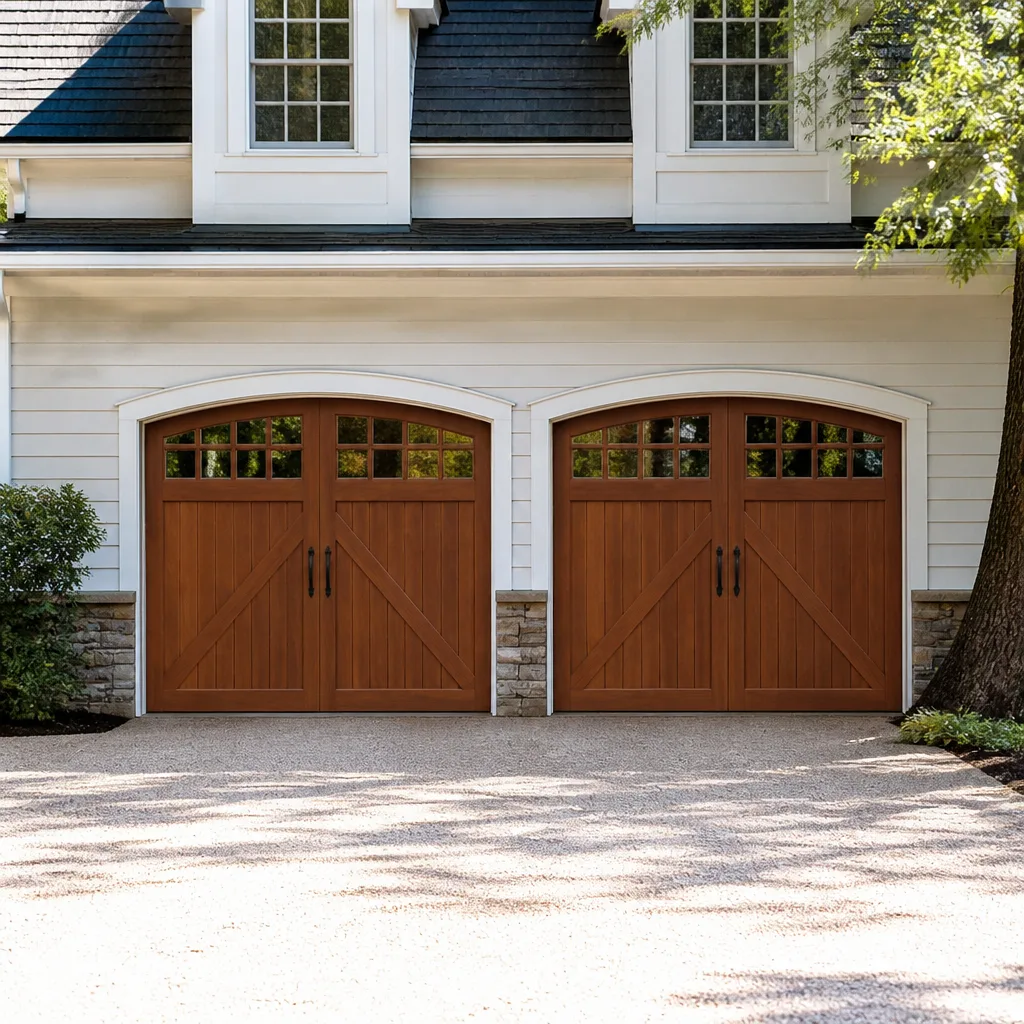 Carriage house
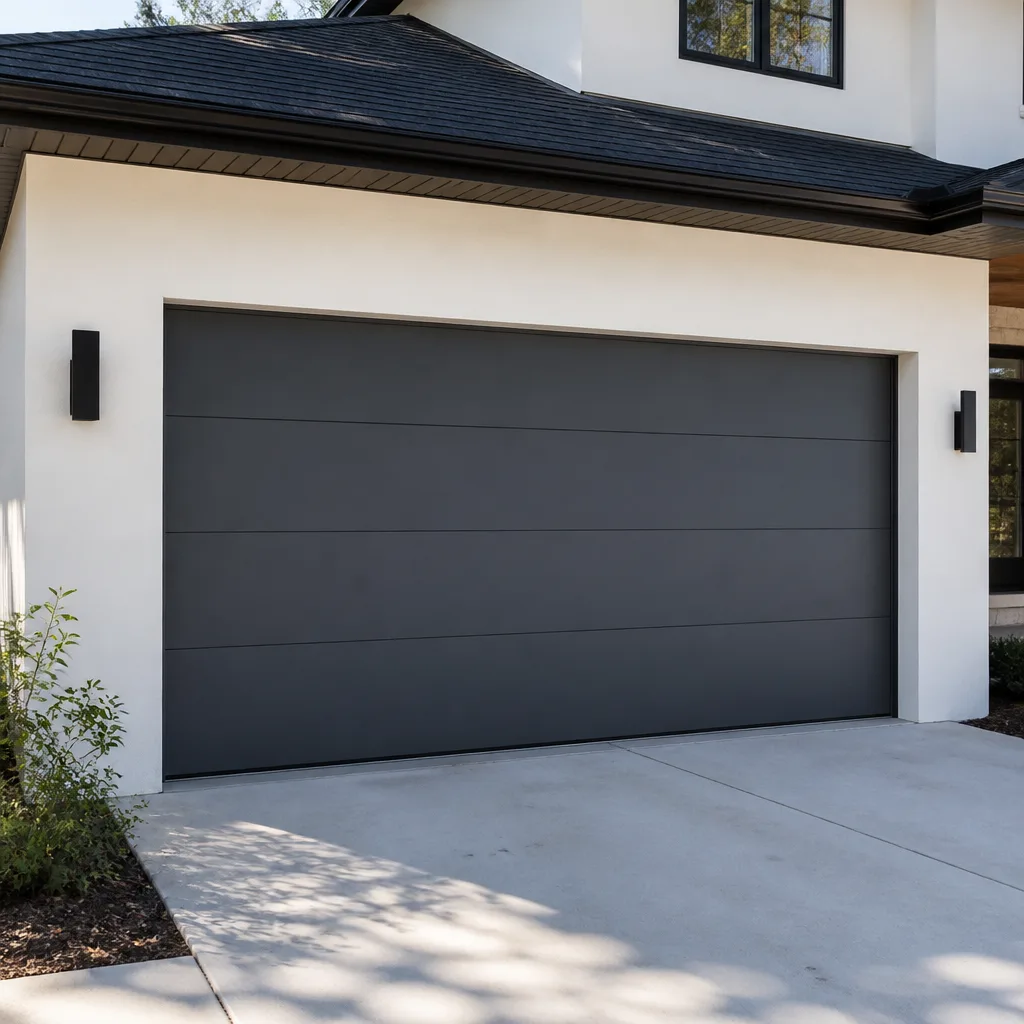 Modern flush
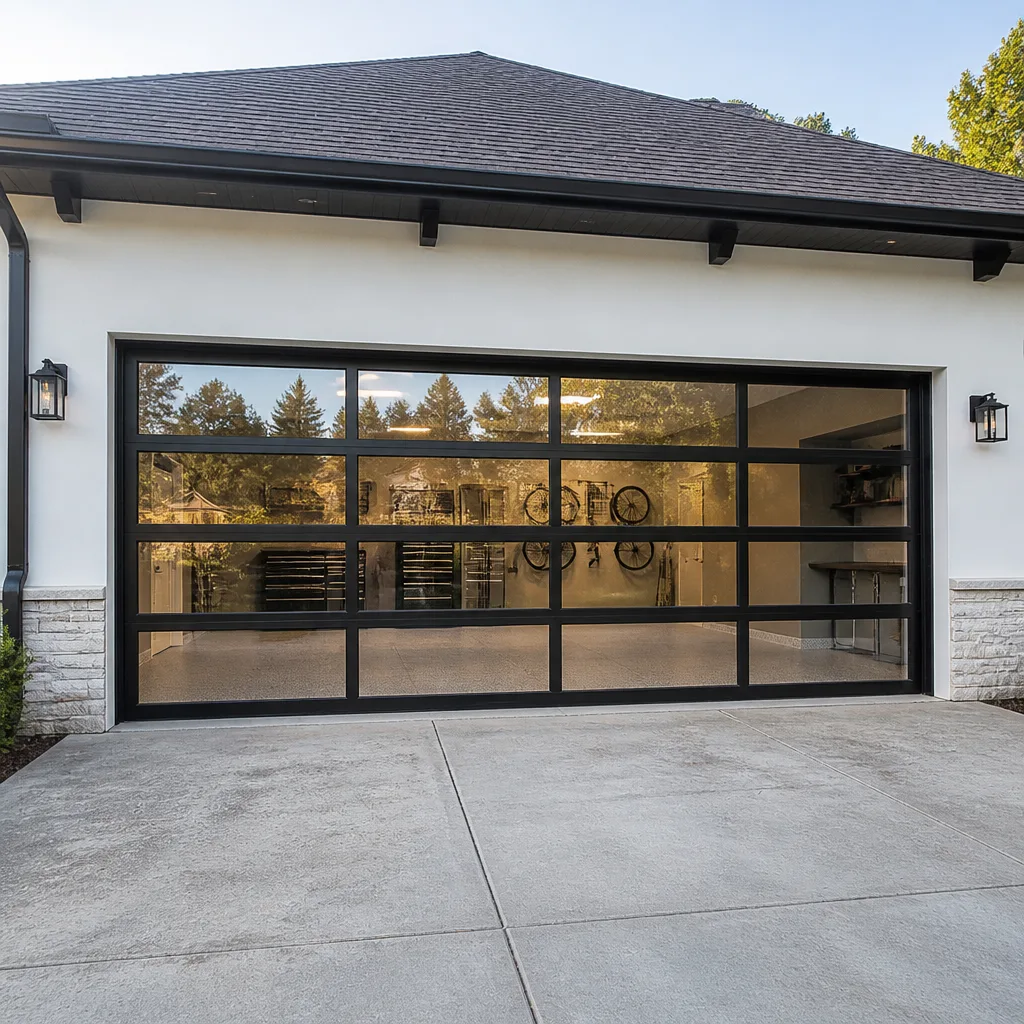 Full-view glass
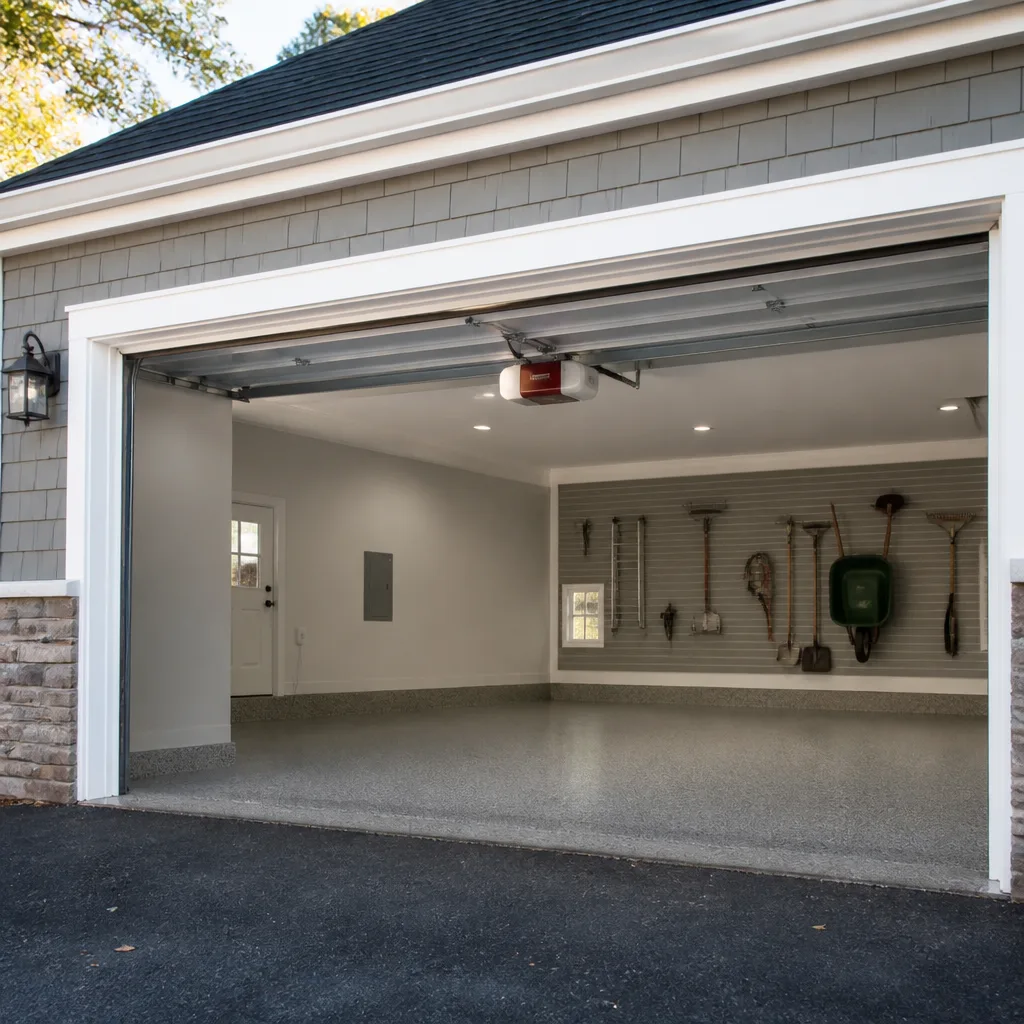 LiftMaster openers
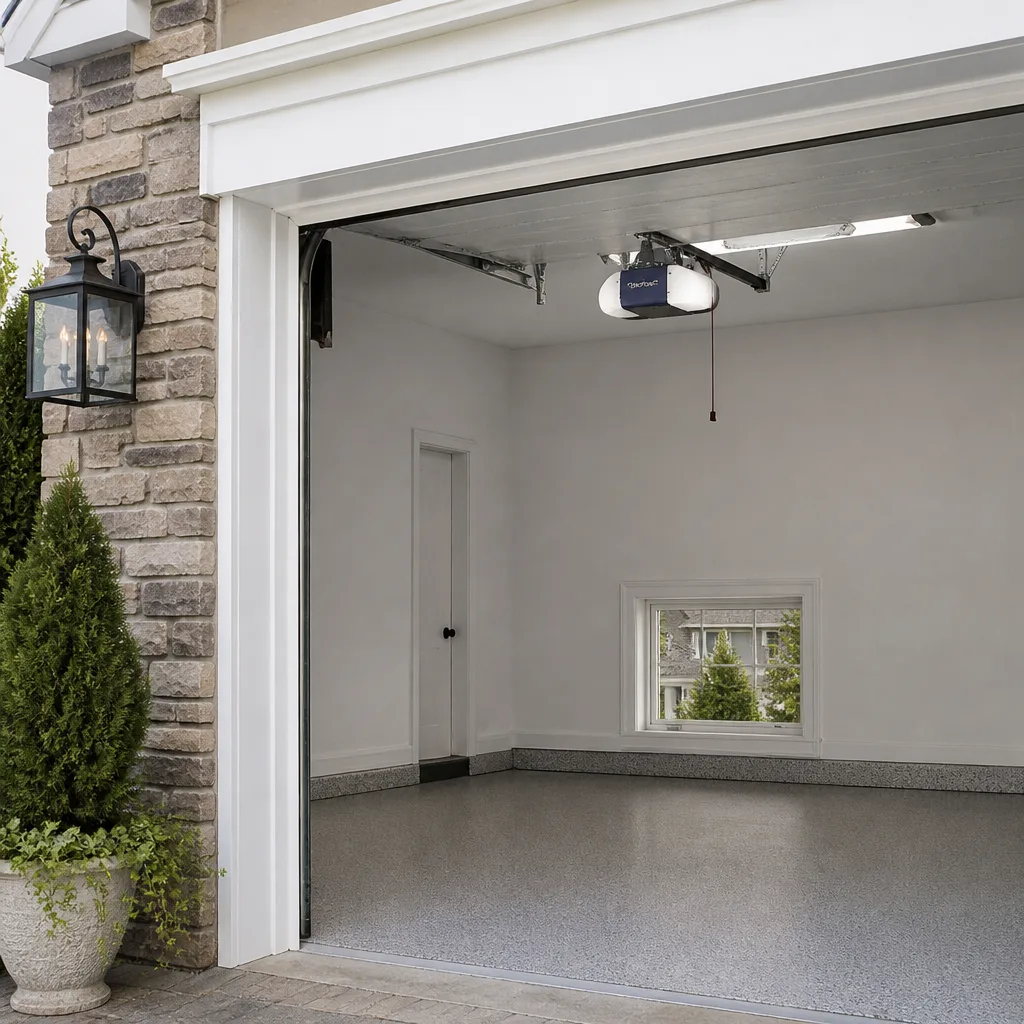 Chamberlain openers
Full 25-point door and opener safety check with every visit - springs, cables, rollers, tracks, and your LiftMaster or Chamberlain opener included
You get a price before we start. It does not change when the pro arrives.
Get your free estimateGarage Door Warning Signs: A Midtown Homeowner’s Reference Guide
A door that reverses the moment it meets the floor isn’t always a crisis. Sometimes it’s a photo-eye knocked out of alignment by a broom handle: a two-minute fix. Other times it’s the last warning before a torsion spring lets go under full cable tension. From the driver’s seat, both look identical. That’s the problem with most warning-sign articles: they hand you a list of symptoms and leave you to guess whether you’re fine until next week or standing in an emergency. This guide fixes that. We classify every common symptom into three urgency tiers, decode noises by timing and location, and show you what to check from a safe distance. It’s written for Midtown homeowners who want a real answer, not a longer worry list.
Quick Answer
Garage door warning signs fall into three urgency tiers. Tier 1 (schedule service within a week): squealing, mild vibration, a slow opener, one photo-eye knocked crooked. Tier 2 (stop using the door and call the same day): a snapped spring, a frayed cable, a door that reverses on contact, or one that won’t fully close. Tier 3 (do not operate, disconnect the opener and call immediately): a door hanging off its tracks, a broken bottom bracket, or a spring that has visibly failed while a car is trapped inside. When in doubt, treat it as Tier 2. A garage door is the heaviest moving object most homes own, and the springs and cables that hold it weigh hundreds of pounds of stored force. That’s why we handle spring work as a dedicated, trained service, not a quick workaround.
Styles & brands we work with
- Raised-panel steel
- Carriage house
- Modern flush
- Full-view glass
- LiftMaster openers
- Chamberlain openers
Table of Contents
- The Three-Tier Urgency System: What Every Symptom Means
- Torsion Spring vs. Broken Cable vs. Track Obstruction: Telling Them Apart
- Noise Diagnostics: What Grinding, Popping, and Squealing Actually Tell You
- What You Can Safely Check From the Driveway
- Opener Behavior Decoded: Hesitation, Reversal, and Partial Travel
- Why Midtown Doors Fail the Way They Do
- What a Door That Ages in Place Tells You
- How We Support the Brand Already in Your Garage
The Three-Tier Urgency System: What Every Symptom Means
Most homeowners treat every odd symptom the same way: mild panic, a quick internet search, then nothing. The tier system replaces that with a decision. Before you read further, find your symptom below and note the tier. If you’re unsure between two tiers, always act on the higher one.
Tier 1: Use With Caution, Schedule Within a Week
- Squealing or grinding on open or close (usually a dry or worn roller, hinge, or bearing)
- Mild vibration or shaking that has crept in gradually
- A door that travels slower than it used to but still fully opens and closes
- One photo-eye knocked crooked so the beams don’t line up
- Cosmetic dents or a bent panel that still moves freely in the tracks
A Tier 1 door still works, but it’s telling you a component is wearing. Left alone, worn rollers and dry hinges turn into bigger problems. Schedule a garage door repair visit within the week and keep an eye on it in the meantime.
Tier 2: Stop Using the Door, Call the Same Day
- A loud snap followed by the door becoming very heavy (a spring has likely broken)
- Frayed, kinked, or slack cables on either side of the door
- Reversal on contact with the floor or anything in its path
- A door that won’t fully close, leaving daylight visible underneath
- An opener that runs but the door doesn’t move
At this tier, the door isn’t dependable, and depending on how it fails it may be a security gap that can’t wait for a next-day appointment. Emergency garage door service exists for exactly this: the door won’t open, a car is trapped, or the home is left unsecured. We treat that as a core offering, not an add-on upsell.
Tier 3: Do Not Operate, Disconnect the Opener, Call Immediately
- A door hanging off its tracks or visibly out of the frame
- A bent or broken bottom bracket (never touch this hardware; it’s under extreme tension)
- A visibly failed spring with a car trapped inside
- Cables that have come loose, snapped, or wrapped oddly around a drum
Unplug the opener so no one triggers it by accident, keep everyone clear of the door, and call. Spring and cable hardware at this stage can cause serious injury, so leave it alone until a trained technician has taken the tension out of the system.
Torsion Spring vs. Broken Cable vs. Track Obstruction: Telling Them Apart
Three failure modes produce almost the same surface symptom: the door won’t open or won’t rise evenly. They carry very different risks and very different fixes, and knowing which is which helps you describe the problem accurately when you call. From the driveway you can narrow it down without touching anything.
Failure Mode 1: The Torsion Spring
What you’d notice: a loud bang or snap, then a door that’s suddenly far too heavy to lift by hand (the opener may raise it a few inches and stall, or won’t move it at all). The door may also feel normal on one side and heavy on the other. On a torsion system, the horizontal spring mounted above the door will show a visible gap where the coil has separated. Springs are the most mechanically dangerous part of a garage door because they hold enormous tension. That’s why we keep spring repair a dedicated specialty rather than a side task. If you suspect a spring, don’t run the door to “test” it, especially if a car is inside.
Failure Mode 2: A Broken Cable
What you’d notice: the door rises crooked, hangs low on one side, or binds partway up. Look for loose cable whipping near a drum, a frayed or kinked section, or a cable that’s clearly off its track. A snapped cable is a Tier 2 to Tier 3 situation depending on what it’s done to the door’s position, and it’s not something to evaluate by hand. Cables run alongside the springs and share the same tension risk, so keep your distance.
Failure Mode 3: A Track Obstruction or Bent Track
What you’d notice: the door jams at one panel and reverses, scrapes a track edge, or lifts a few inches and stalls. Common culprits are a bent track, a misaligned roller, a foreign object (a stray tool, a bike part, a child’s toy), or debris in the track. This is the least dangerous of the three, but a door forced past a jammed roller can damage panels or pull cables loose. Clear small obstructions from the track only, and stop if anything under tension is involved.
How to tell them apart in one pass: Walk along the door with the opener OFF. Look first at the spring above the door for a visible gap, then at the cables for loose or frayed sections, then at the tracks for bends or debris. Note which of the three shows the clearest evidence and describe that when you call.
Noise Diagnostics: What Grinding, Popping, and Squealing Actually Tell You
Your garage is a sounding board, so it amplifies everything, which makes a small dry hinge sound like a failing door. In our experience, the useful diagnostic is not the noise itself but where it happens, when it happens, and whether it repeats on open and close. Run this checklist with the opener on a normal cycle and listen from the driveway, not inside the garage.
Grinding
- Grinding at the opener unit itself: a worn gear, a stripped sprocket, or a chain that’s out of alignment. On a Craftsman or Genie unit, this is often inside the motor housing rather than at the door.
- Grinding along the door or at the tracks: worn rollers, damaged bearings, or a track the rollers are dragging against.
- Grinding only at the start or end of travel: the opener’s travel limits are out of adjustment, so the door is being forced slightly past its stopping point.
Popping
- A single loud pop at the door: something binding and releasing under tension, often a roller jumping a track or a hinge under strain.
- Repeated popping as the door moves: a floor bump, a warped panel, or a bent section of track the door is riding over.
- A pop followed by a sudden lightness in the door: stop and treat it as a spring failure until proven otherwise.
Squealing
- High-pitched squeal across the whole travel: dry hinges or rollers that need lubrication, the simplest and most common fix.
- Squealing near one location: a specific bearing or bracket, which often means a worn part rather than lubrication alone.
- Squealing on a LiftMaster or Chamberlain opener with a belt drive: usually a worn belt or pulley rather than the door itself.
Write down three things before you call: where the sound comes from, when in the cycle it happens, and which direction (open, close, or both). That single set of notes lets our technicians arrive already suspecting the right component, which saves time on the visit.
What You Can Safely Check From the Driveway
You can learn a lot about a door without touching a single piece of hardware. Every check below is done standing back, with the opener off and the door at rest.
Safe to Check
- Spring condition. From the driveway, look at the spring above the door. A horizontal torsion spring with a visible gap between coils has failed. Never reach up to inspect it closer. Just note whether the coil looks continuous or broken.
- Cable condition. Look at the vertical cables along each side. A frayed, kinked, slack, or dangling cable is a stop sign. Don’t pull on it to test it.
- Track alignment. Sight down each vertical track from the ground. It should be straight and parallel to the door; visible bends mean the rollers can jump.
- Door levelness. With the door closed, check whether the bottom edge sits level to the floor. A door that hangs low on one side suggests a cable, a spring, or a track issue on that side.
- Rollers and hinges. Look for cracked rollers, missing hinge pins, or a roller that’s come out of its track. These are visible from the ground.
- Photo-eye beams. The two small sensors at the bottom of the tracks should face each other and both show a steady light (most units light up when aligned). A crooked sensor is a Tier 1 issue.
Never Touch
- Springs, cables, drums, and the bottom bracket. These carry hundreds of pounds of stored force and can cause serious injury.
- Anything that requires lifting the door by hand to inspect. If the door is too heavy to lift on its own, that’s a spring or cable problem, and a professional needs to handle it.
If you can safely assess the spring, the cables, and the tracks from a distance, you’ll know which tier you’re in before you call. That’s the whole point of the driveway check.
Opener Behavior Decoded: Hesitation, Reversal, and Partial Travel
Openers fail in patterns, and each pattern points at a different component. Here’s how we read them, so you can describe yours accurately.
Hesitation at the Start
The opener seems to pause or strain before the door moves. Most often this is a door that’s slightly heavier than it used to be (worn springs, binding rollers) or an opener that’s underpowered for the door. It can also be a failing capacitor in the opener motor. On a LiftMaster or Chamberlain unit, hesitation plus a partial cycle is often the logic board or capacitor rather than the door itself.
Reversal Without Contact
The door reverses before it touches anything. The first suspect is the safety system: misaligned or dirty photo-eyes, or a door that’s binding enough for the opener to feel resistance and reverse. The second suspect is the opener’s force/limit settings being too sensitive. A door that reverses on contact is different: that’s the safety reverse working correctly, and it usually points to a door that’s set too heavy or an obstruction at the floor.
Partial Travel
The door opens or closes part way then stops. This can be the opener’s travel limits out of adjustment, a door that’s binding at a specific point, or a logic board fault on a smart opener. On a Wi-Fi-enabled LiftMaster or Chamberlain, a door that stops at the same point every time is often a limit setting; a door that stops at random points is often a board or sensor issue.
Opener Runs but Door Doesn’t Move
The motor turns but the door stays put. That can be a broken spring making the door too heavy, a snapped cable, or a stripped gear in the opener. It’s Tier 2 either way, so stop using the opener.
Remote or App Doesn’t Respond
If the wall button works but the remote doesn’t, start with the remote battery and re-pairing. If the wall button also fails, the issue is at the opener or the power. On a smart opener, connectivity faults (app drops, Wi-Fi disconnects) live in the opener’s bridge or logic board and are a separate repair from a mechanical failure. That distinction matters when you call: it’s a different fix from a snapped spring.
We service openers across LiftMaster, Chamberlain, Genie, and Craftsman, from legacy motor-drive models to current smart units. A knowledgeable technician should arrive already familiar with the specific brand in your garage.
Why Midtown Doors Fail the Way They Do
Garage doors in Midtown age in place. Most of the housing here is decades old, and so is a lot of the hardware attached to it. That produces a recognizable pattern: original springs that have cycled far past their expected service life, tracks that have been adjusted to accommodate a house that has shifted, and openers that were installed years after the door and were never matched to its weight. When a spring on a door like that finally lets go, it’s usually not a surprise to a technician. It’s a predictable end of life.
Midtown’s mix of mature homes, narrow lots, and tight driveways adds a few local wrinkles. Doors facing narrow driveways often get bumped by cars and bikes, so bent tracks and dented panels show up more than they might on wider lots. Doors in attached garages are also part of the home’s thermal envelope, and a door that’s been quietly letting air in won’t show up as a broken part. It shows up as a higher energy bill, a sticky handle, or a draft into the house. A visual check each season catches the small things before they become the expensive ones. If something looks off, the written estimate you get from a visit should tell you exactly what’s wrong and what it costs to fix, before any work starts.
What a Door That Ages in Place Tells You
As a door reaches end of life, warning signs tend to cluster rather than appear one at a time. You might see a frayed cable and a rust line at the bottom and a slow opener in the same month. That’s not bad luck: the door is telling you it’s reaching the point where patching each part costs more than replacing them. A few patterns are worth knowing.
- Rust at the bottom of the door is normal surface wear over time. It becomes a structural problem when the bottom section is rusted through and the door no longer closes fully against the floor.
- A door that’s been patched more than once for the same problem is a candidate for garage door installation rather than another repair.
- Cracked or broken panels that can’t be sourced for a door that’s no longer made are a common reason to replace rather than repair.
- An opener that’s been repaired for the same fault twice is usually at the point where a new opener is the simpler call.
We cover the full range, from emergency repair through installation, so a homeowner never has to find a second company when a repair turns into a replacement conversation. If it’s a repair, we quote it. If it’s a replacement, we quote that. Either way, the price is agreed before any work starts.
How We Support the Brand Already in Your Garage
One thing we hear often from Midtown homeowners: they’re worried the technician will open the door housing, see a brand they don’t work on, and leave. That’s not how we operate. We work on the brand already in your garage, across eight of the most widely installed door and opener manufacturers on the market: LiftMaster, Chamberlain, Genie, Clopay, Amarr, Wayne Dalton, Craftsman, and Raynor. That spans the mechanical systems, the legacy openers, and the current smart/Wi-Fi models. When you tell us what you have, we can tell you whether it’s a repair or a replacement in the first conversation, and a visiting technician arrives already familiar with that equipment. It’s part of why a single call can cover anything from a snapped spring to a full new door.
Common Mistakes to Avoid
- Testing the door “just to see” after a snap. Forcing a door with a failed spring or cable is one of the fastest ways to turn a repair into an injury. If you hear a snap and the door feels heavy, stop and call.
- Treating a reversal on contact as normal. Maybe the photo-eyes got bumped, or maybe the door is binding. Either way it’s a stop sign. Don’t clear it by adjusting the opener’s force settings; that disables the safety reverse.
- Watching the door from directly underneath. Stand off to the side and back when it moves. Tracks, cables, and springs can fail without warning.
- Replacing a whole opener when the door is the problem. A door that’s set too heavy will wear out a new opener too. Diagnose the door first.
- Patching the same part twice. If a door has been repaired twice for the same symptom, the next step is usually replacing the door, not the part.
- Assuming a bent track is a small thing. A bent track in a narrow Midtown driveway is common, and a door forced past it can pull cables loose. Fix it early.
- Calling for a replacement before a technician has looked at it. A lot of doors that “need replacing” need a repair. A written estimate from a visit tells you which, before you spend.
See the difference
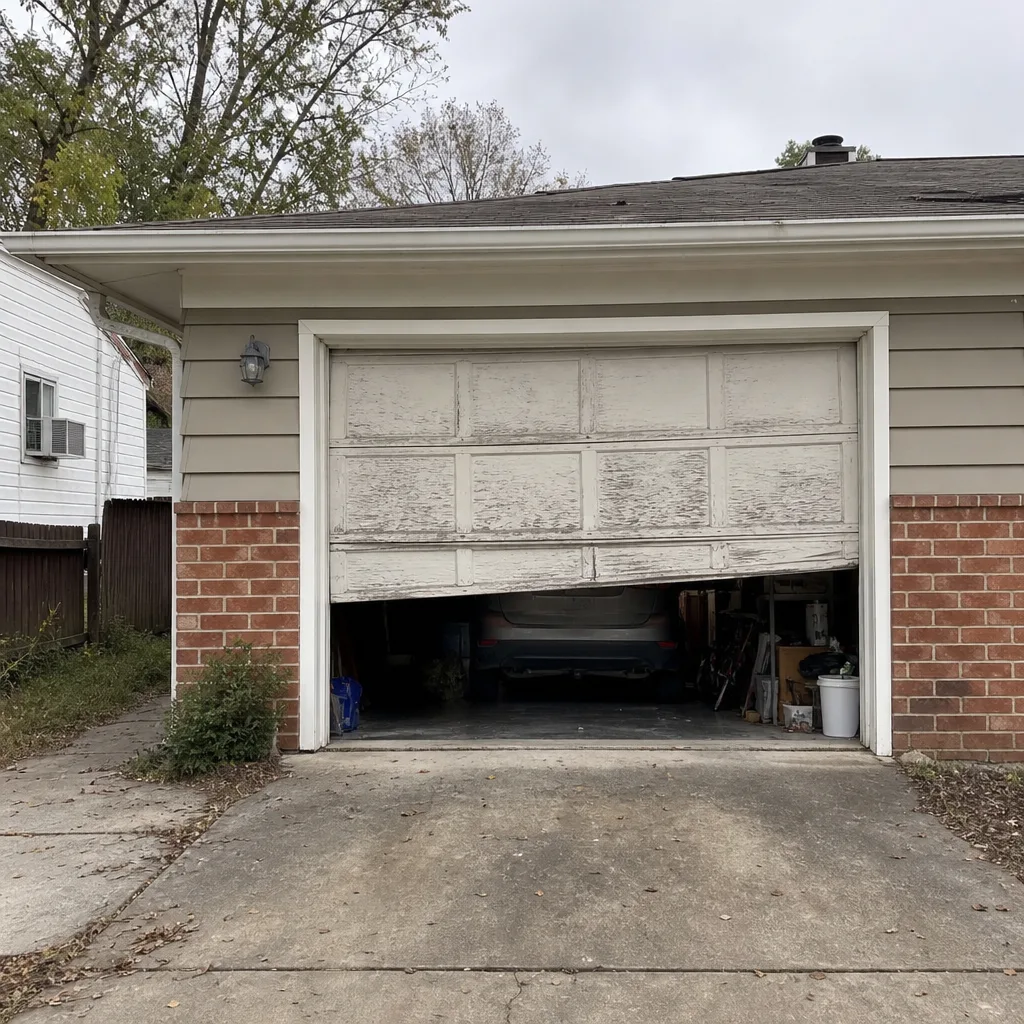 Before
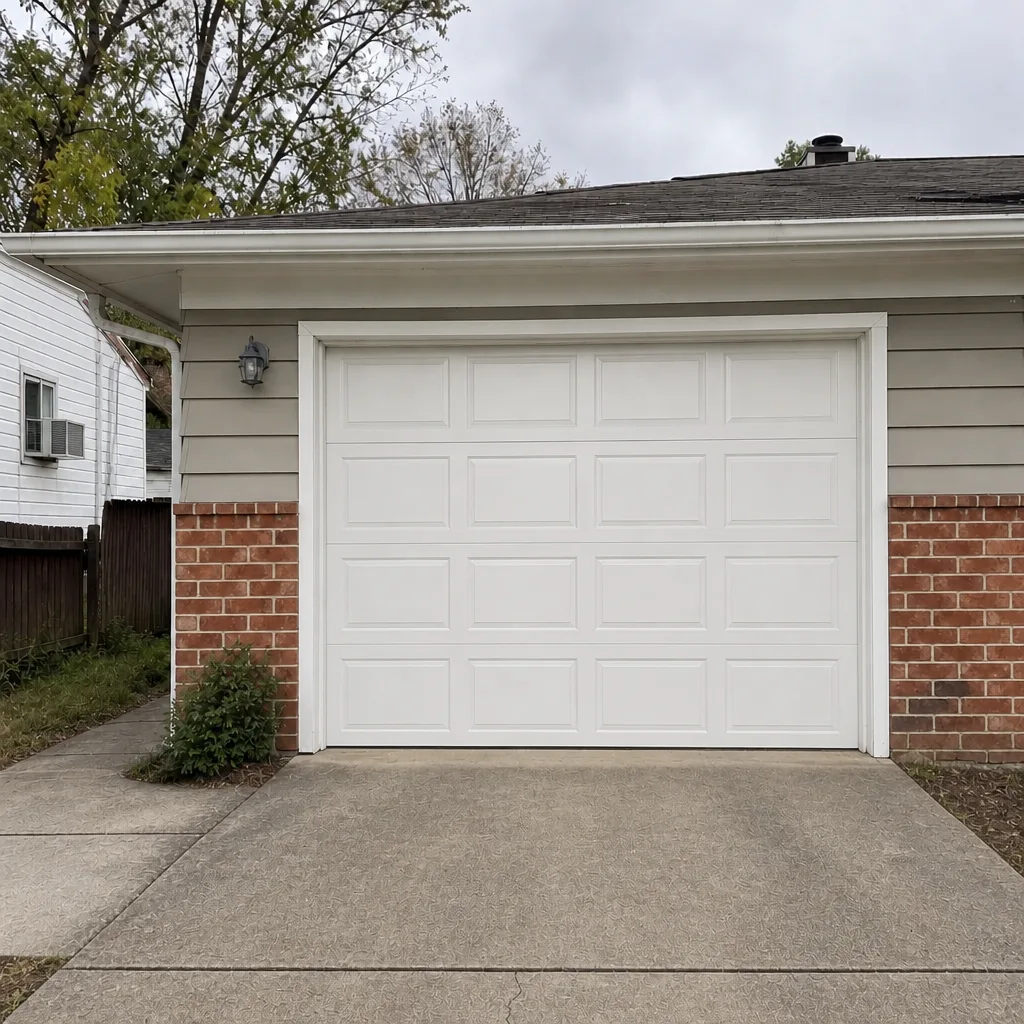 After
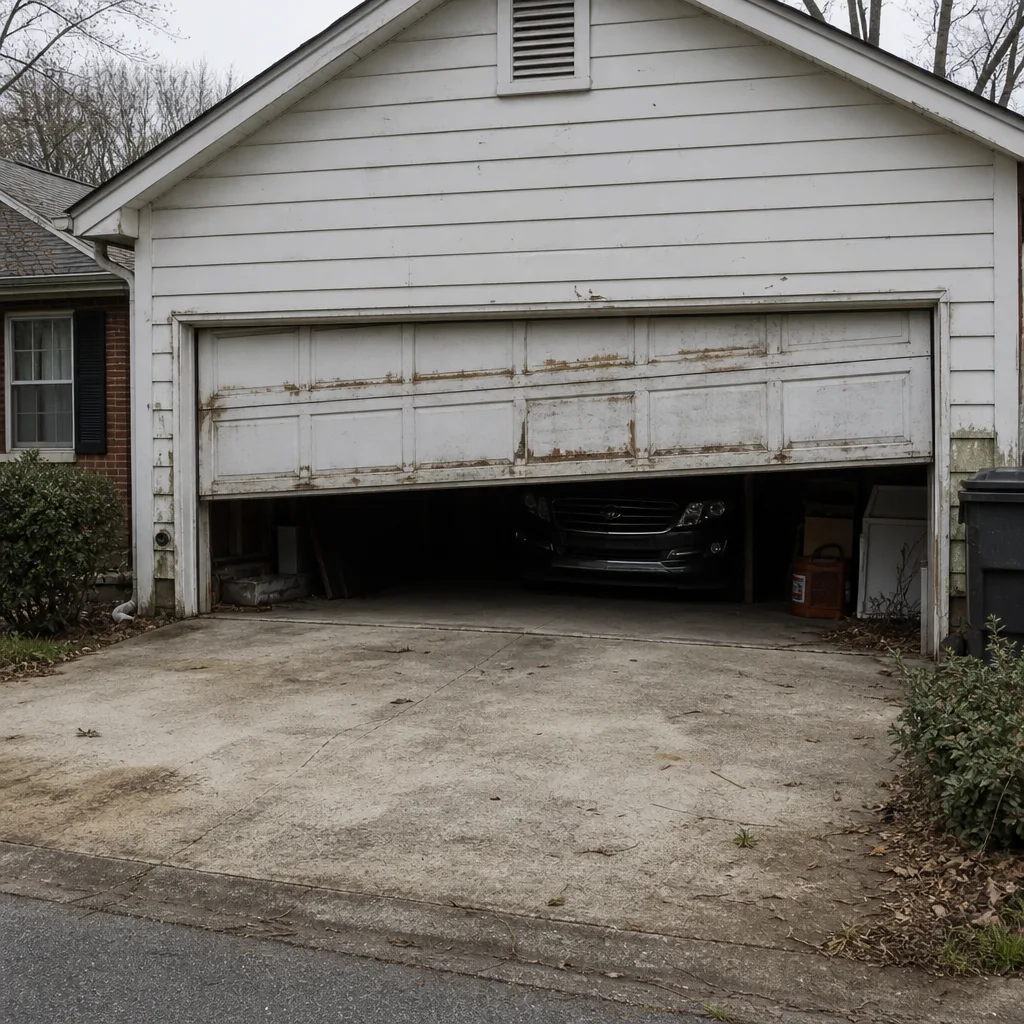 Before
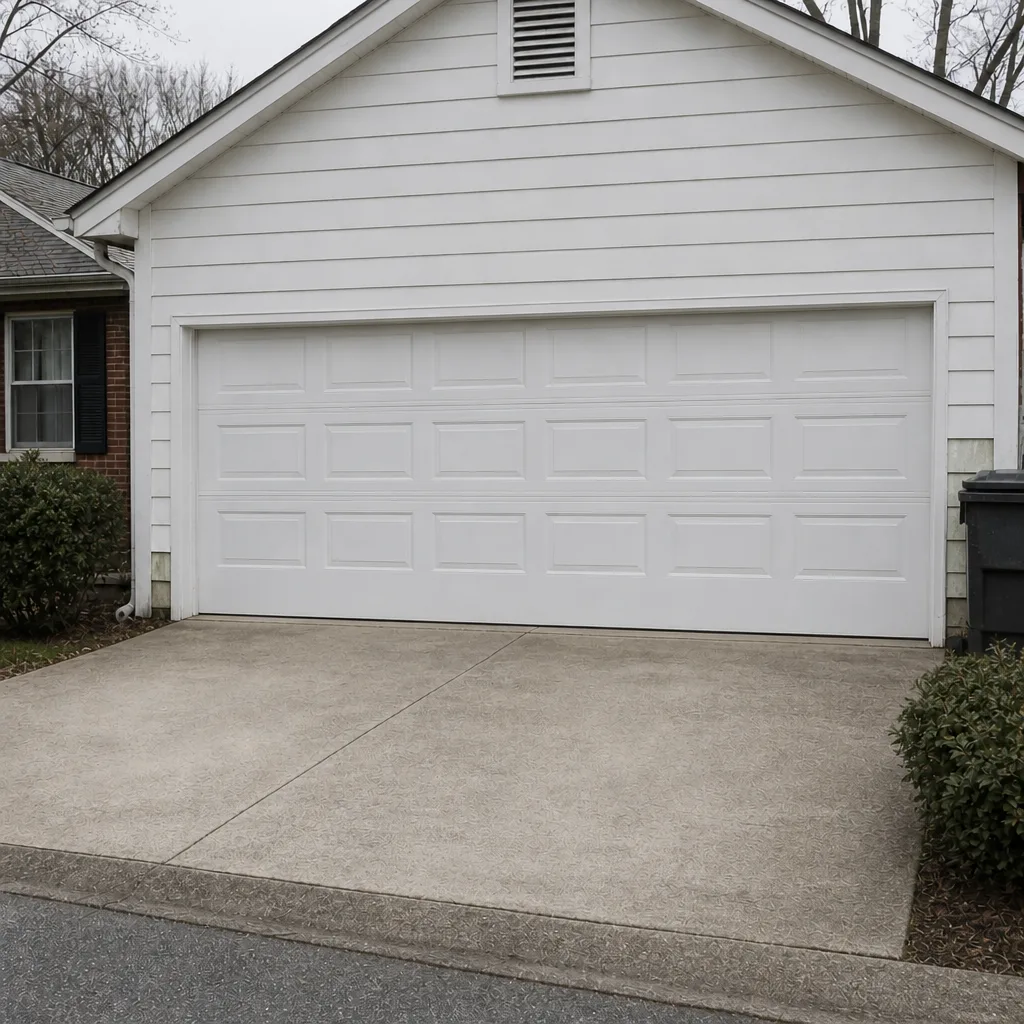 After
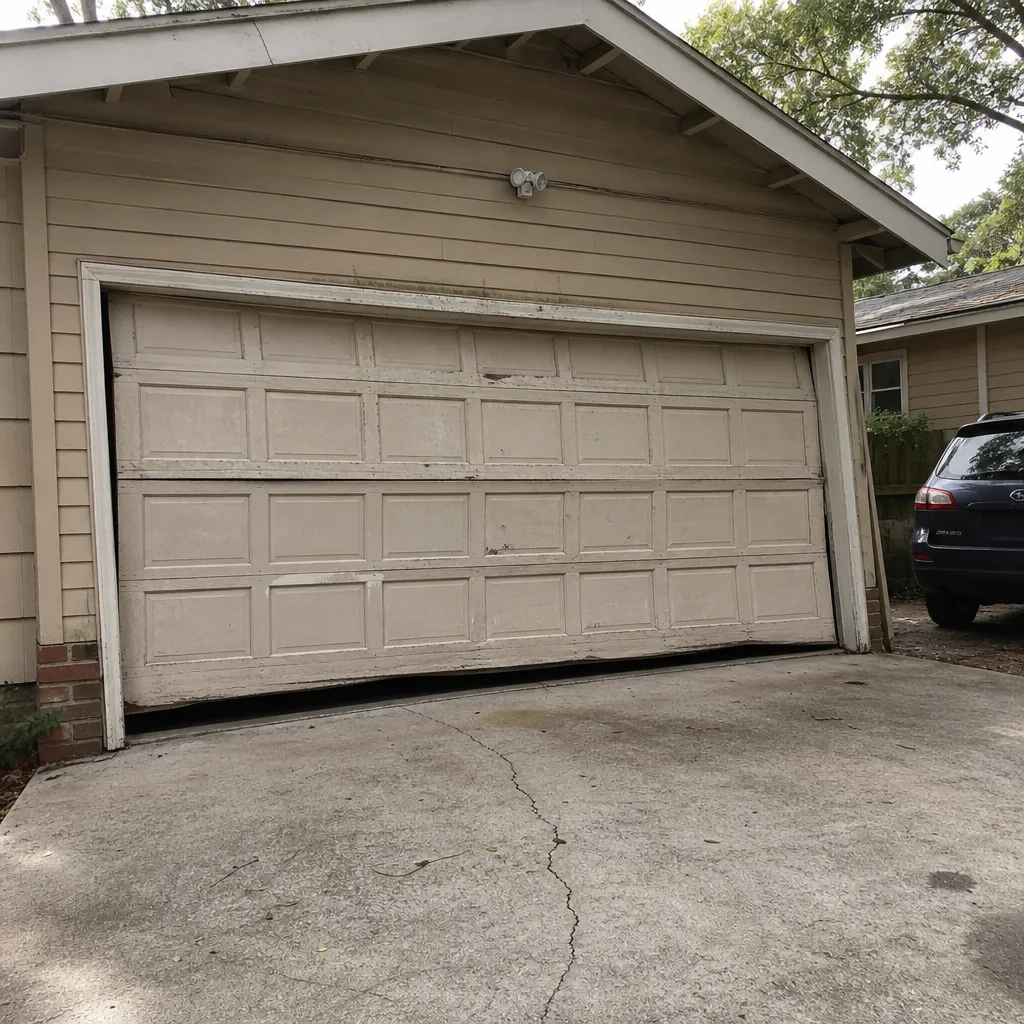 Before
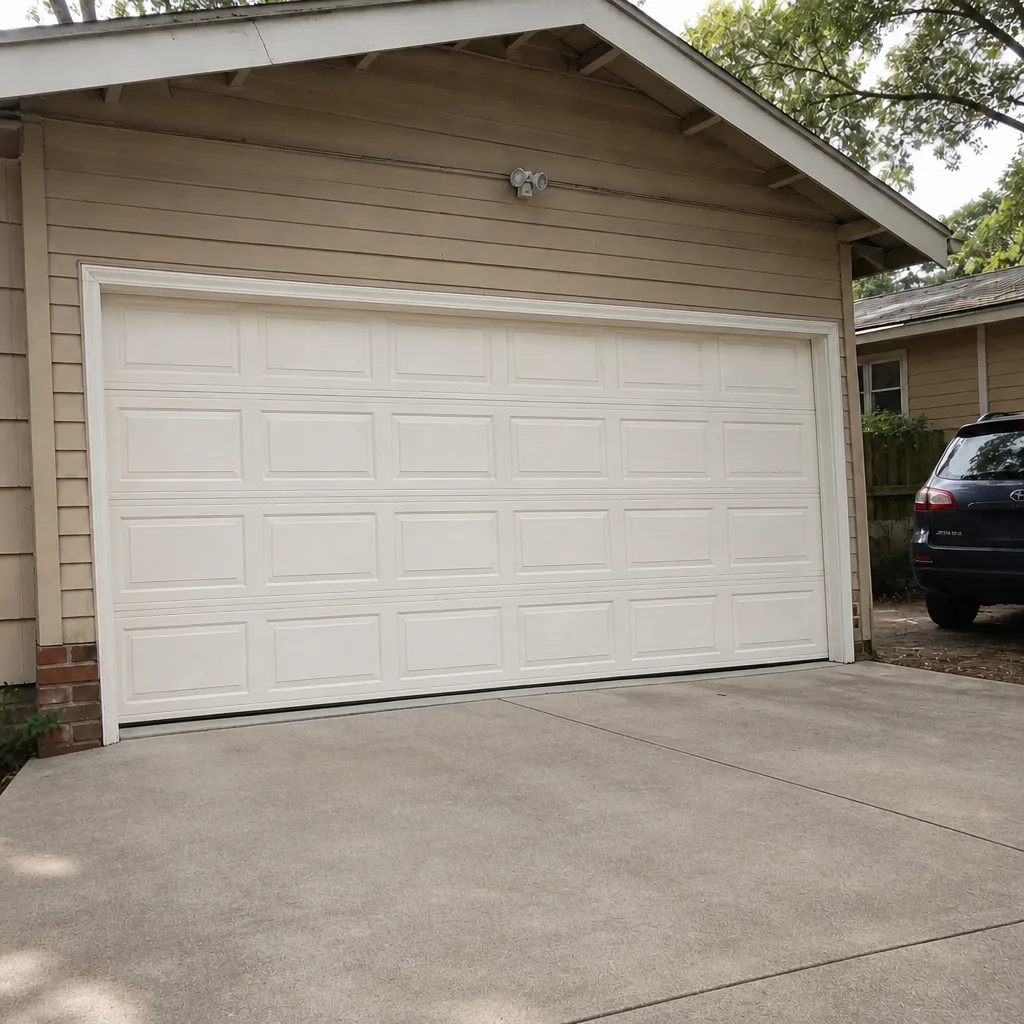 After
When to Call a Professional
Call a professional whenever a warning sign moves the door into Tier 2 or Tier 3. That means a snapped spring, a frayed or slack cable, a door that reverses on contact, a door that won’t fully close, a door off its tracks, or an opener that runs but the door doesn’t move. Call immediately if a car is trapped inside, the home is left unsecured, or the door is visibly hanging in the frame. Our technicians have up to 14 years of experience, and we handle emergency repair, standard repair, opener repair, spring repair, and full installation in one place. Garage Door Repair Midtown offers free estimates in Midtown. Call (833) 700-6163 to get a written price before any work starts.
Frequently Asked Questions
An opener that hesitates or a door that feels heavier than usual is the first sign of a spring on its way out. The door still works, but it’s taking more force than it should. Next in line are noise and mild vibration. If you notice any of them, schedule a visit within the week rather than waiting for the snap. Call (833) 700-6163 for a free estimate.
A failed torsion spring usually shows a visible gap between coils above the door, and the door becomes far too heavy to lift. A broken cable usually leaves the door hanging low on one side, moving crooked, or binding partway up, with a loose or frayed cable visible along that side. Both are stop-using-the-door situations. Don’t try to test either by hand. Call (833) 700-6163 for a same-day visit.
Not usually, but it needs a look. Reversal without contact is most often a misaligned or dirty photo-eye, which is a quick fix. Less often it’s a door that’s binding enough for the opener to reverse on resistance, which wears the opener. Treat it as Tier 1 (schedule within the week) unless the door also feels heavy, in which case treat it as Tier 2. Call (833) 700-6163 and describe when the reversal happens.
Small things are fair game: a crooked photo-eye, a remote battery, a light cleaning of the tracks, a dry hinge. Springs, cables, drums, and the bottom bracket are not, because they carry hundreds of pounds of stored force and can cause serious injury. Leave those to a trained technician. Call (833) 700-6163 for anything involving springs or cables.
Yes. We work on the brand already in your garage, across LiftMaster, Chamberlain, Genie, and Craftsman openers, plus Clopay, Amarr, Wayne Dalton, and Raynor doors. That includes legacy mechanical systems and current smart/Wi-Fi models, so a technician arrives familiar with the equipment. Tell us the brand when you call. Ring (833) 700-6163 for a free estimate.
Sometimes, and we’ll tell you straight. If the door has been patched twice for the same fault, or the panels are no longer available, replacement usually costs less over time than another repair. If a repair will solve it cleanly, that’s what we quote. The written estimate sets the price before any work starts. Call (833) 700-6163 to find out which one you need.
The Bottom Line
Every warning sign on a garage door belongs to one of three tiers. Some mean schedule service this week, some mean stop using the door today, and some mean unplug the opener and call now. Knowing which tier you’re in is the difference between a quiet repair and a genuine emergency. Check your springs, cables, and tracks from a distance, note where and when the noise happens, and describe your door and opener brand when you call. That’s all it takes to move from worry to a decision. If you’re in Midtown and you’re not sure which tier you’re in, the safest choice is to have a trained technician look before you run the door again. Call (833) 700-6163 for a free estimate.
Written by the team at Garage Door Repair Midtown.