Last updated November 23, 2026
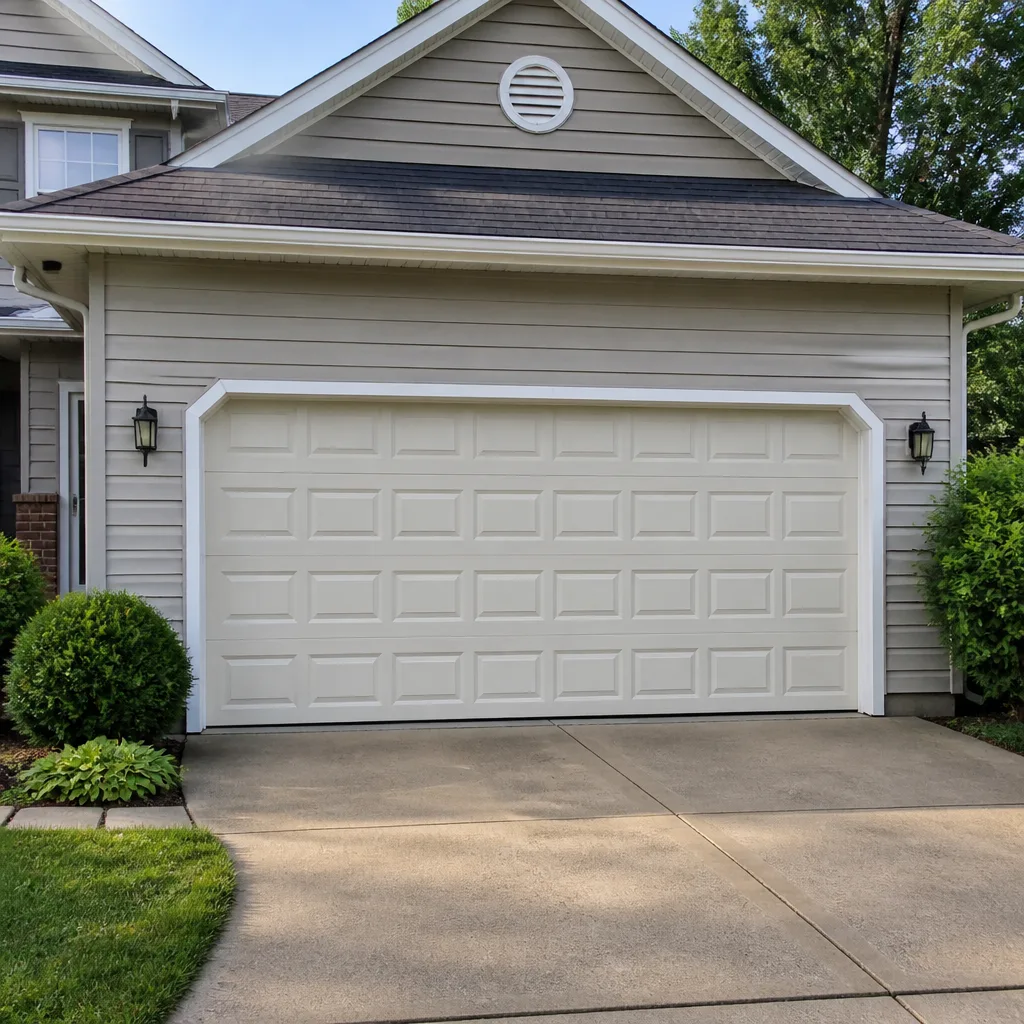 Raised-panel steel
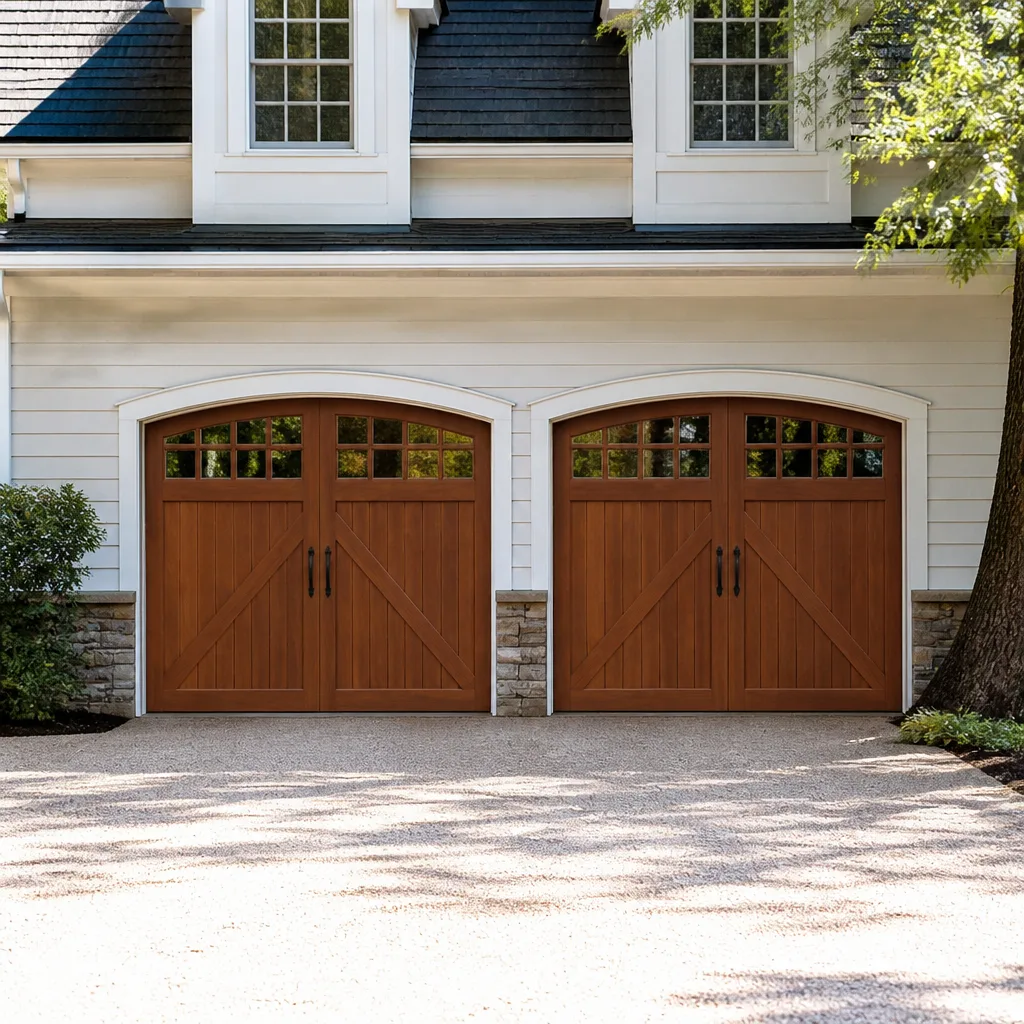 Carriage house
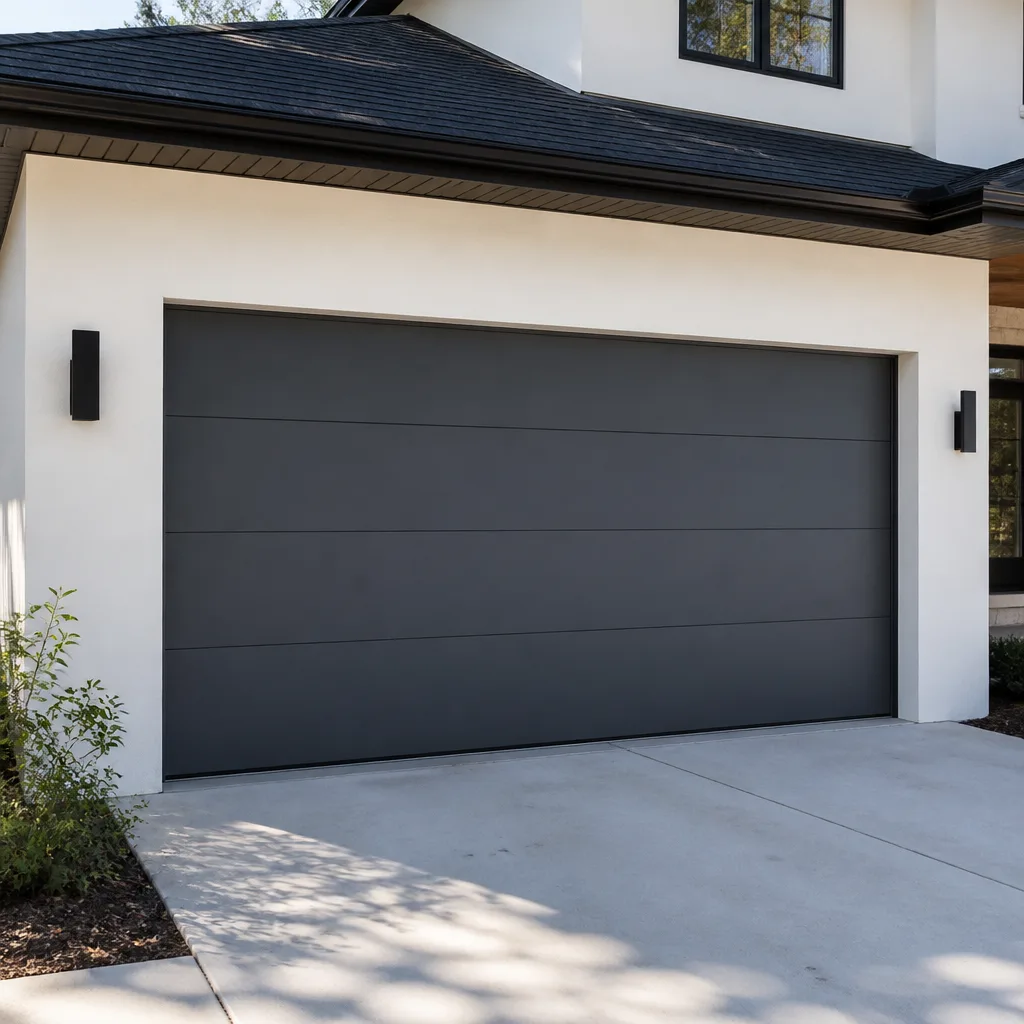 Modern flush
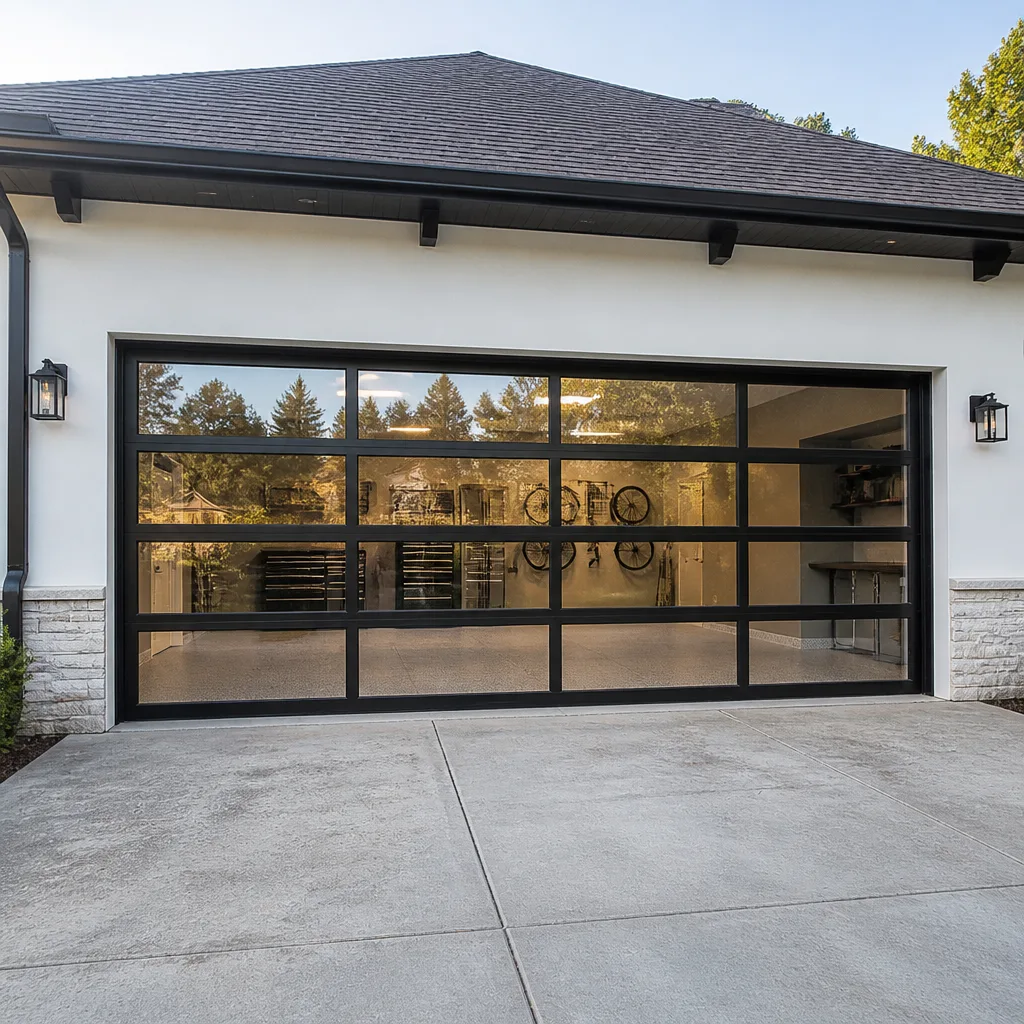 Full-view glass
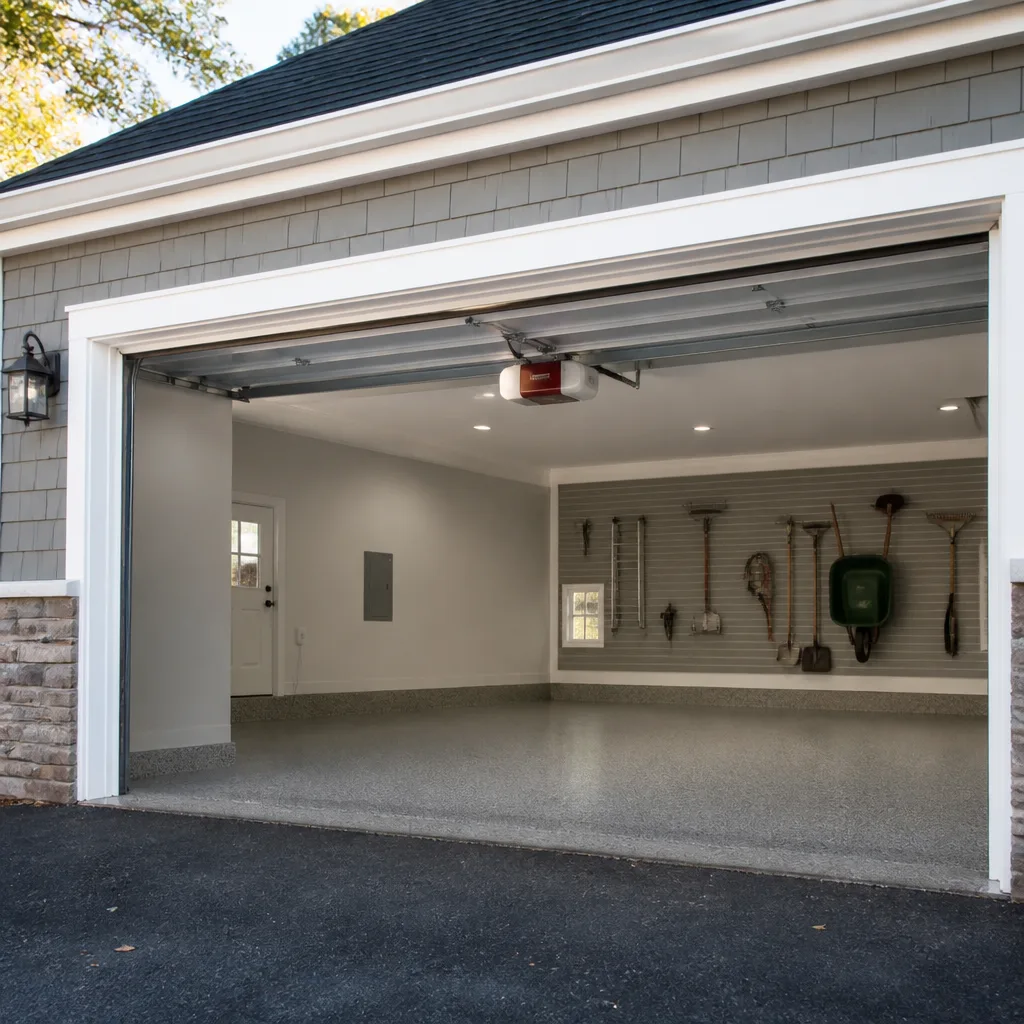 LiftMaster openers
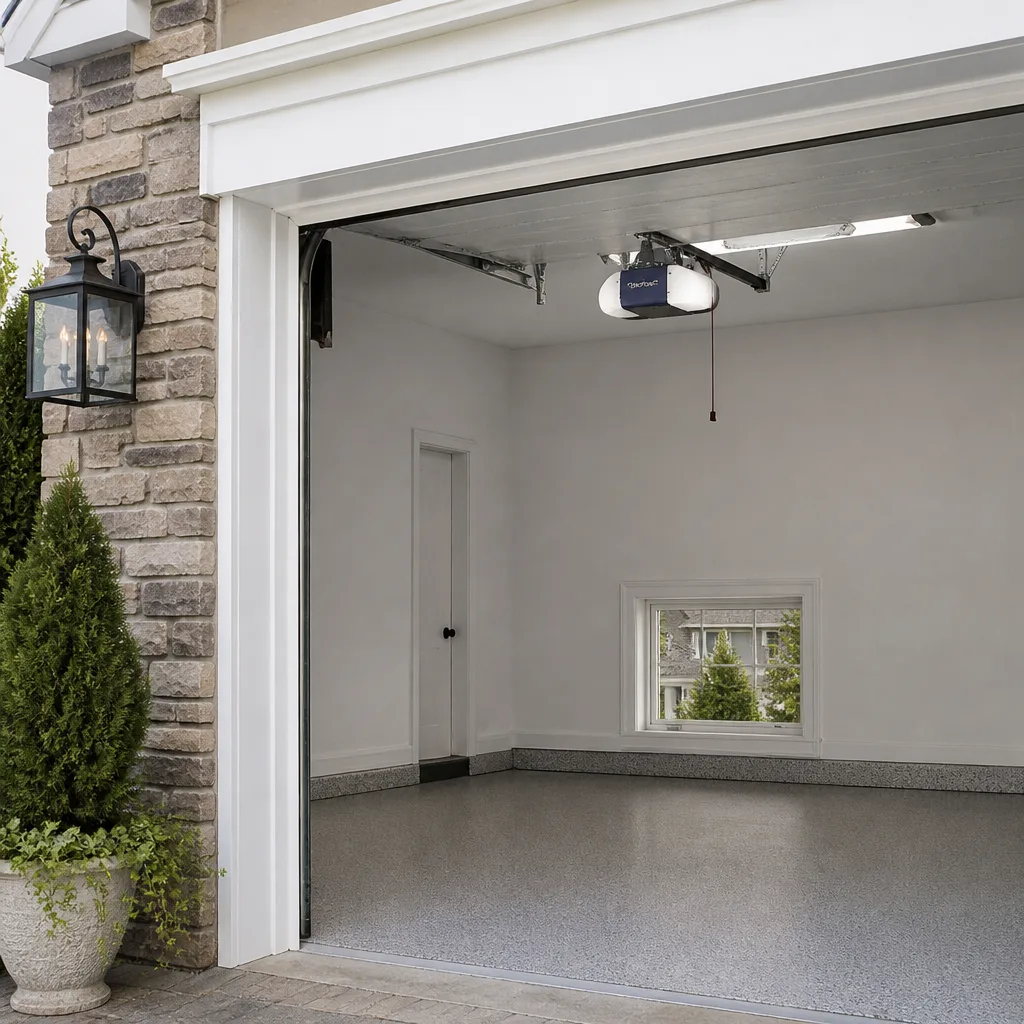 Chamberlain openers
Full 25-point door and opener safety check with every visit - springs, cables, rollers, tracks, and your LiftMaster or Chamberlain opener included
You get a price before we start. It does not change when the pro arrives.
Get your free estimateThe Complete Guide to Garage Doors in Midtown
A garage door that works flawlessly in a dry Phoenix suburb can rust, warp, and bind within two summers of Midtown’s heat-humidity cycle. That’s the part most buying guides skip. They rank doors by curb appeal and openers by app features, then send you home with hardware that fights the climate from day one. Midtown is a different job: dense lots, tight driveways, alley-loaded garages, and a humid season that punishes the wrong finish. This guide reframes every major decision – brand, material, opener type, and even how you read an R-value – around what actually performs in Atlanta-area conditions. By the end you’ll know what to buy, what to avoid, and when to call a technician.
Quick Answer
For Midtown homes, the garage door that holds up best is a properly gauged steel door with a factory-applied finish and correct bottom seals, paired with a LiftMaster or Chamberlain opener for reliable operation and smart-home connectivity. Material choice, opening dimensions, and condensation control matter far more than the showroom look. Measure your rough opening, match the door to your driveway and alley access, and never skip a written estimate before installation.
Styles & brands we work with
- Raised-panel steel
- Carriage house
- Modern flush
- Full-view glass
- LiftMaster openers
- Chamberlain openers
Table of Contents
- Why Midtown’s Climate Changes Every Garage Door Decision
- How Midtown Lot Layouts Affect the Door and Opener You Buy
- Door Materials That Survive Georgia Humidity – and Those That Don’t
- Brand Ecosystems: What LiftMaster, Chamberlain, Genie, and Craftsman Do Well
- New Construction vs. Retrofit Openings: Why the Dimension Drives Everything
- Reading R-Value Honestly
- Repair or Replace: How to Decide
- Maintenance Calendar Built for Midtown
Why Midtown’s Climate Changes Every Garage Door Decision
Atlanta’s humidity is the single largest threat to a garage door, and Midtown sits right in the thick of it. Summer afternoons push moisture into every unsealed gap, and a poorly finished steel panel starts showing rust at the seams in a season or two. That’s a maintenance fact, not a scare tactic – it’s why so many doors in this neighborhood age unevenly, with the bottom section failing long before the top.
The daily swing matters too. Warm, damp air meets a cooler garage interior in the mornings, so condensation forms on the coldest surfaces first: the bottom panel, the springs, the track hardware. Over months, that moisture works into bare metal edges, screw holes, and any spot where the factory paint has chipped. A door installed in an arid climate never sees that cycle.
What does this mean for a Midtown homeowner?
- Finish quality beats gauge alone. A heavier steel door with a thin finish rusts faster than a lighter door with a proper factory coating.
- Bottom seals and thresholds earn their keep. Most moisture enters at the floor line. A worn seal lets water and humid air straight into the panel.
- Ventilation helps. An attached garage that traps damp air is harder on the door than a detached one that breathes.
- Wood overlay needs maintenance. Real wood in this humidity moves with the seasons, and painted wood overlay needs regular recoating to stay stable.
This is why we ask Midtown customers about their garage’s orientation, whether it’s attached, and how the lot drains before we recommend a material. The right answer for a shaded alley garage differs from the right answer for a sun-baked driveway.
How Midtown Lot Layouts Affect the Door and Opener You Buy
Midtown’s urban lot configurations are the second factor most guides ignore. Narrow driveways, alley-loaded garages, and row-house setbacks change both the door you can fit and the opener that makes sense.
Narrow driveways
A tight driveway limits how much clearance you have to maneuver a vehicle while the door is moving, and it often means a single-car door rather than a wide double. Single doors are lighter, which is easier on springs and openers, but they also cycle more often in a busy household. A belt-drive opener runs quieter and is a better fit when the garage sits close to living space.
Alley-loaded garages
Many Midtown properties open onto an alley rather than a street-facing driveway. That layout usually means a shorter approach and less room for a door to swing or tilt out, which pushes most homeowners toward a sectional door that travels straight up and back along the ceiling. It also affects security, since the garage becomes the primary entry point – a door that seals tight and an opener with rolling-code technology matter more here.
Row houses and attached garages
In a row house, the garage shares walls with living space, so noise and thermal separation count. Insulated doors and quiet belt-drive openers make a measurable difference in daily comfort. If the garage is under a bedroom, an opener that rattles on every cycle gets old fast.
Before you shop, walk your lot and answer three questions: how wide is the drive, where does the door travel, and how close is the garage to living space? Those answers narrow your options faster than any catalog. When a repair turns into a replacement conversation, our garage door installation team measures the actual opening rather than assuming a standard size.
Door Materials That Survive Georgia Humidity – and Those That Don’t
Material choice is where Midtown homeowners most often get burned. The same door that looks great in a showroom can fail within a few years under Atlanta’s humidity if the finish and construction aren’t right for the climate.
Steel
Steel is the workhorse for Midtown. A steel door with a proper factory finish, galvanized substrate, and sealed seams handles humidity well. The variable is gauge and coating: thinner steel with a light finish dents and rusts sooner, while a heavier-gauge door with a baked-on finish lasts far longer. Steel is also the easiest material to repair and repaint.
Composite
Composite and fiberglass-faced doors resist moisture well and won’t rust, which makes them appealing in humid climates. They can crack or fade under direct sun over time, but for a shaded alley garage they’re a solid choice. They’re also lighter, which is gentler on springs and openers.
Wood overlay
Wood overlay gives the warm look many Midtown homeowners want, but real wood in this humidity moves, swells, and needs regular recoating. A wood-overlay door over a steel core performs better than solid wood because the steel resists moisture and the overlay adds appearance. Left unsealed, wood is the material most likely to fail early here.
What fails within 3-5 years
- Thin-gauge steel with a poor finish that chips at the bottom panel and rusts.
- Solid wood without a proper seal, especially on a sun-exposed or rain-driven face.
- Any door with a worn bottom seal that lets moisture pool against the panel.
- Doors installed without correct drainage at the threshold.
Brand matters here too. Clopay and Amarr both build steel and composite lines suited to humid climates, and matching the door to the climate – not just the curb – is the difference between a door that lasts and one that doesn’t.
Brand Ecosystems: What LiftMaster, Chamberlain, Genie, and Craftsman Do Well
Openers are where brand ecosystem matters most, because the brand you choose determines how easily your door integrates with the rest of your home – and where it might fall short under real-world conditions.
LiftMaster
LiftMaster is the premium side of the Chamberlain family and is built for reliable daily operation, with strong smart-home integration and a wide dealer network. It’s a common fit for Midtown homes that want app control and quiet belt-drive operation. The tradeoff is cost, and some models lock you into proprietary accessories.
Chamberlain
Chamberlain shares engineering with LiftMaster but targets a broader price range. It’s a strong value pick with solid connectivity. Where it can fall short is in the loudest entry-level models, which rattle more in a garage that shares walls with living space.
Genie
Genie openers are known for straightforward mechanical design and quiet operation in mid-range models. They’re a good match for a household that wants dependable operation without paying for every smart feature. Legacy Genie units are still common in Midtown garages, and parts availability for older models is the main thing to check.
Craftsman
Craftsman openers are the legacy workhorse found in a huge share of older Midtown garages. They’re simple and repairable, and many homeowners keep them running for years. The catch is that older Craftsman units lack modern rolling-code security and smart features, so connectivity-driven upgrades often mean a replacement rather than a repair.
We service all four of these brands, plus opener-compatible doors from Clopay, Amarr, Wayne Dalton, and Raynor. If your opener stops responding, our garage door opener repair team works on both legacy and smart units.
New Construction vs. Retrofit Openings: Why the Dimension Drives Everything
The difference between a new-construction rough opening and a retrofit opening is the dimension that quietly controls every product decision – door size, track configuration, spring tension, and even the opener model.
New-construction rough opening
In new construction, the rough opening is framed to standard dimensions and built for the door you plan to install. The header height, jamb width, and clearance allow the door and track to be specified correctly from the start. That freedom means you can choose the door type you actually want rather than fitting the door to the hole.
Retrofit opening
In an existing Midtown garage, you’re working with whatever the builder left behind decades ago. That opening may be non-standard, out of square, or too low for a modern insulated door. A retrofit job often requires modifying the track, adjusting spring tension, or choosing a door at the exact size available rather than a catalog standard.
What to measure before you shop
- Measure the opening width inside the jambs, not the outside frame.
- Measure the opening height from the floor to the header.
- Measure the headroom – the distance from the top of the opening to the ceiling or lowest obstruction.
- Measure the backroom – how far back the door travels when open.
- Note any side clearance for the track, and check for low pipes or ducts in the travel path.
Those five numbers tell you which doors will fit and which won’t. A door that’s the wrong size for your opening will fight the track from the day it’s installed – which is why a proper measure and written estimate come before any order.
Reading R-Value Honestly
The R-value on a door’s spec sheet and the thermal performance of that door once it’s installed are two different things. That gap is why R-value comparisons alone can mislead a Midtown buyer.
R-value measures a material’s resistance to heat flow under lab conditions. In a real garage, thermal performance depends on how well the door seals against the opening. Gaps around the perimeter, a worn bottom seal, or a poorly fitted door let air move freely, and an insulated door with a high R-value but a poor seal performs worse than a lower-rated door that seals tight.
What actually matters for Midtown:
- Perimeter seals. A good seal does more to keep humidity and heat out than an extra point of R-value.
- Bottom threshold. The floor line is the biggest air and moisture leak in most garages.
- Insulation type. Polyurethane and polyurethane-injected panels generally outperform polystyrene, but only if the door seals well.
- Door-to-wall fit. An insulated door on an unsealed, out-of-square opening is only partly insulated.
Use R-value as one part of the decision, not the whole thing. The door that seals properly, fits the opening, and matches your climate wins.
Repair or Replace: How to Decide
Repair usually wins when the door’s structure and finish are sound and the failure is mechanical. Replace when the panels are rusted through, the door is the wrong size for the opening, or repeated repairs start costing more than a new door.
Weigh these factors:
- Age and finish condition. A door with rusted-through bottom panels is often a replacement candidate.
- Repair frequency. A door that needs a new spring, then a new panel, then new hinges within a short window is telling you something.
- Safety hardware. A door without modern safety features on the opener is a reason to upgrade.
- Size mismatch. A door fighting a non-standard opening is worth replacing with a fitted door.
For a same-day mechanical problem like a snapped spring or a door off its tracks, call for garage door repair before assuming replacement. When the door itself is sound, repair keeps it in service. When it isn’t, we’ll tell you plainly.
Maintenance Calendar Built for Midtown
Midtown’s humidity cycle rewards a simple, seasonal maintenance habit. You don’t need a complicated schedule – a few checks a few times a year keep a door working and catch small problems before they become expensive ones.
- Monthly: test the opener’s safety reverse by placing an object in the door’s path, and listen for grinding or rattling.
- Monthly: inspect the bottom seal for tears and the track for debris.
- Quarterly: check hinges, rollers, and bolts for looseness, and wipe down metal surfaces where moisture collects.
- Seasonally: look for rust at seams and the bottom panel, and reseal any chipped finish on a steel door.
- Annually: have the springs, cables, and opener inspected by a trained technician – that’s the hardware with real tension behind it.
High-tension springs and cables can cause serious injury if handled incorrectly. Leave that work to a trained professional. If a door makes a loud snap or the opener runs without lifting the door, that’s spring or cable territory, not a DIY fix.
For a full guide to keeping your door in shape, our Garage Door Repair Midtown team can walk you through what to check and when.
Common Mistakes to Avoid
- Buying for looks over climate. A door chosen purely on showroom appearance may rust or warp within a few humid seasons in Midtown. Match the material and finish to the climate first.
- Skipping the rough-opening measurement. Ordering a standard-size door for a non-standard opening guarantees fit problems. Measure width, height, headroom, and backroom before you shop.
- Ignoring the bottom seal. A worn seal lets moisture and air into the panel. It’s cheap to replace and protects the most vulnerable part of the door.
- Treating R-value as the whole answer. A high R-value on a door that seals poorly performs worse than a lower-rated door that seals well.
- Choosing an opener by price alone. A loud entry-level opener in a garage that shares walls with a bedroom becomes a daily annoyance. Match the drive type to your lot.
- Attempting spring work yourself. Springs are under extreme tension. This is the most dangerous part of the system and belongs to a trained technician.
- Replacing a door that only needs repair. A sound door with a broken spring or off-track roller doesn’t need replacing. Get a diagnosis before you spend on a new door.
See the difference
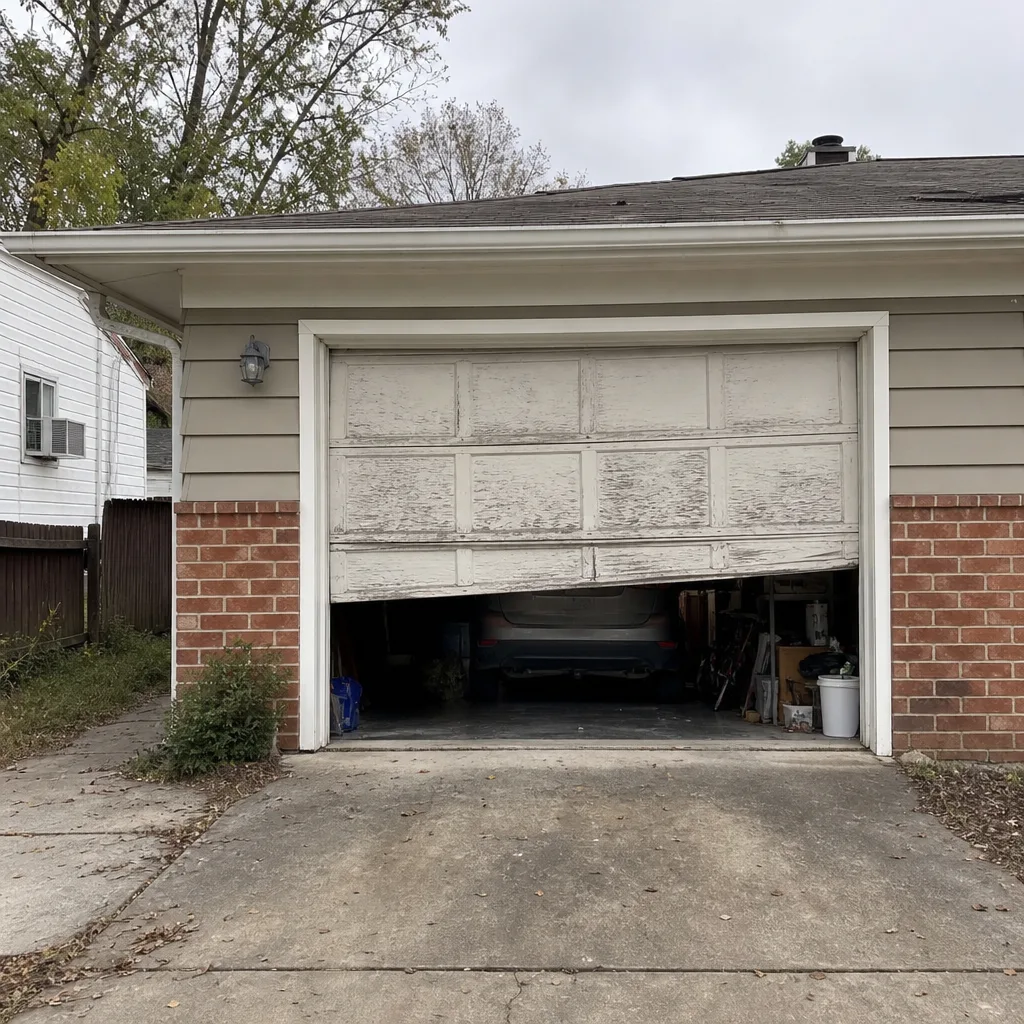 Before
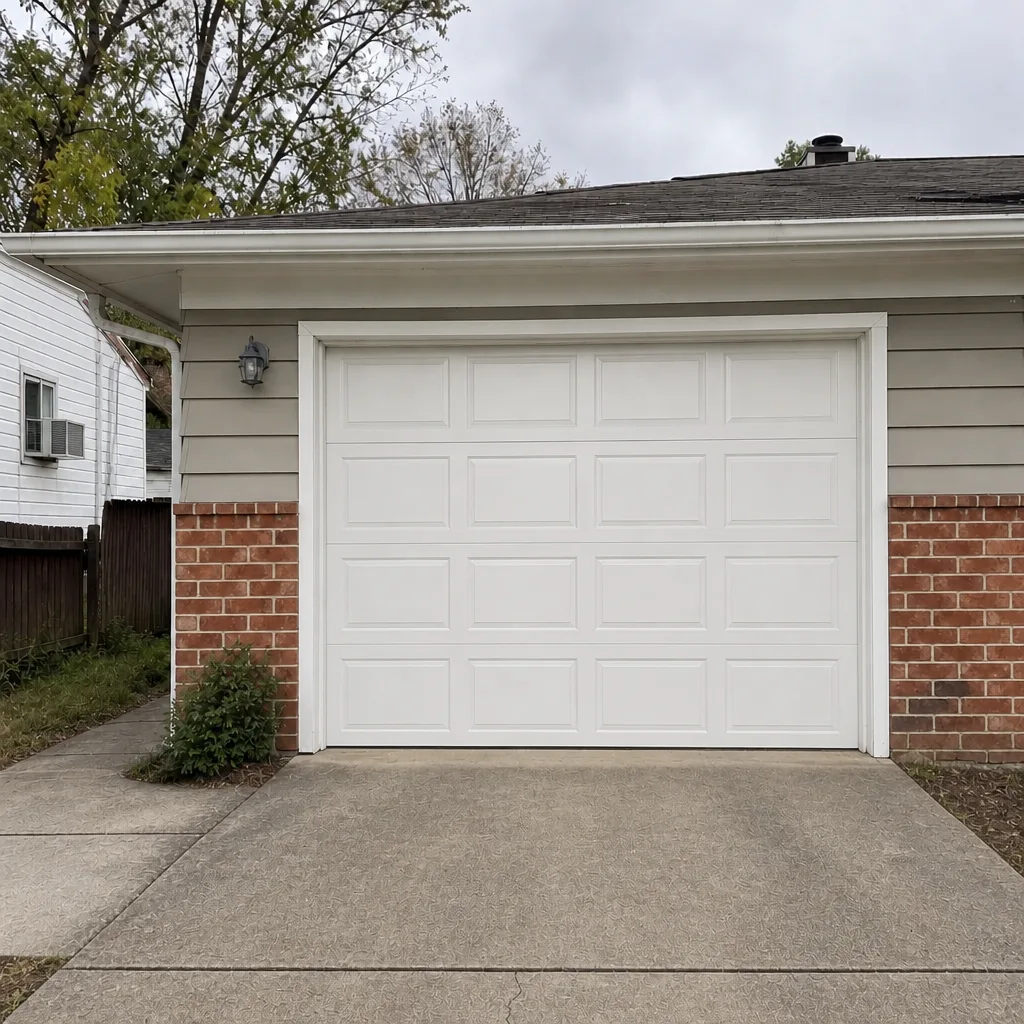 After
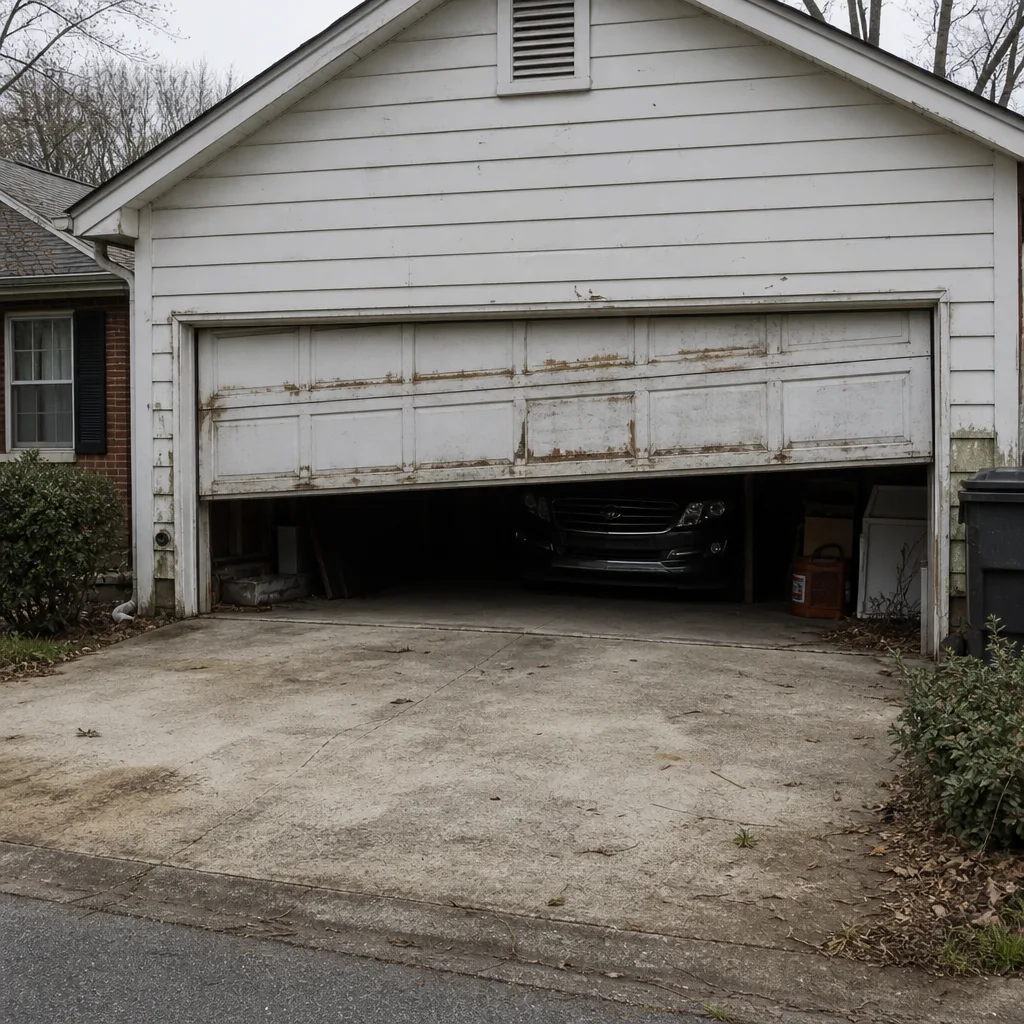 Before
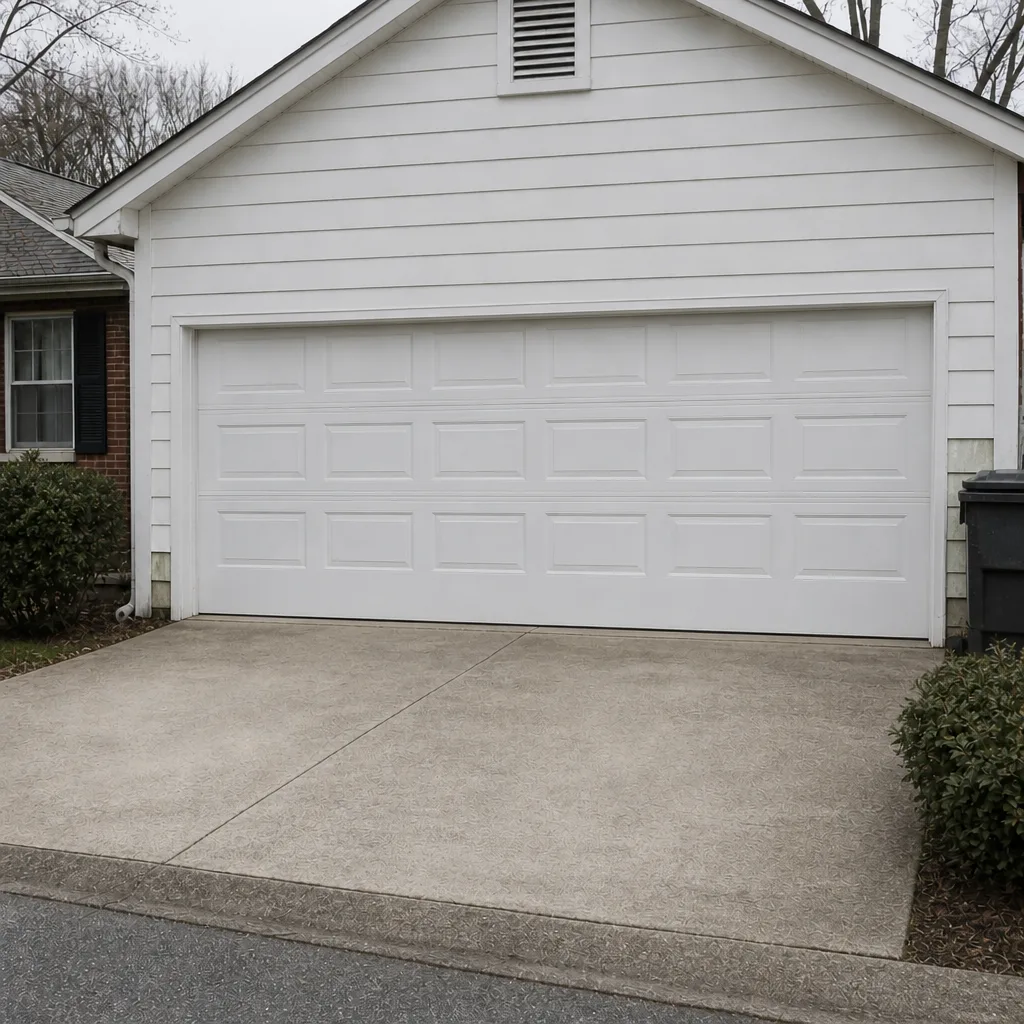 After
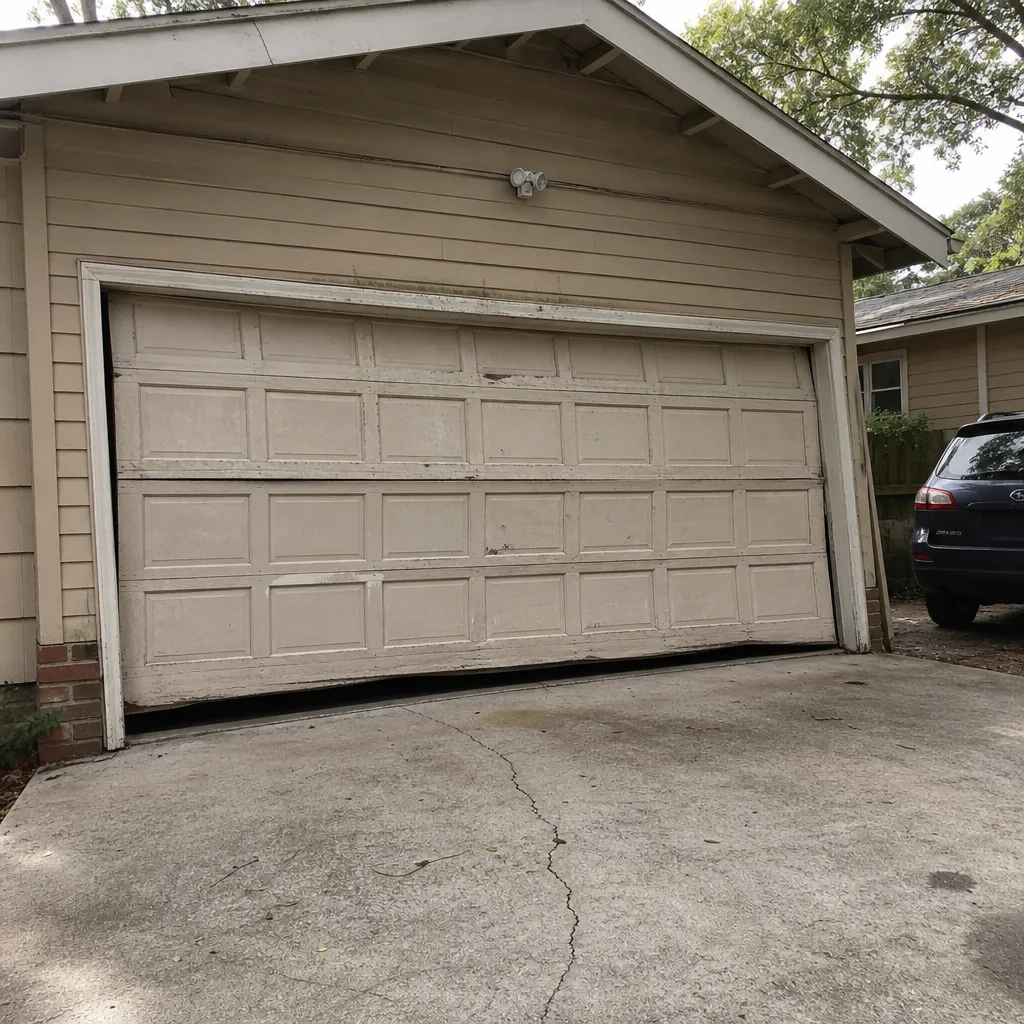 Before
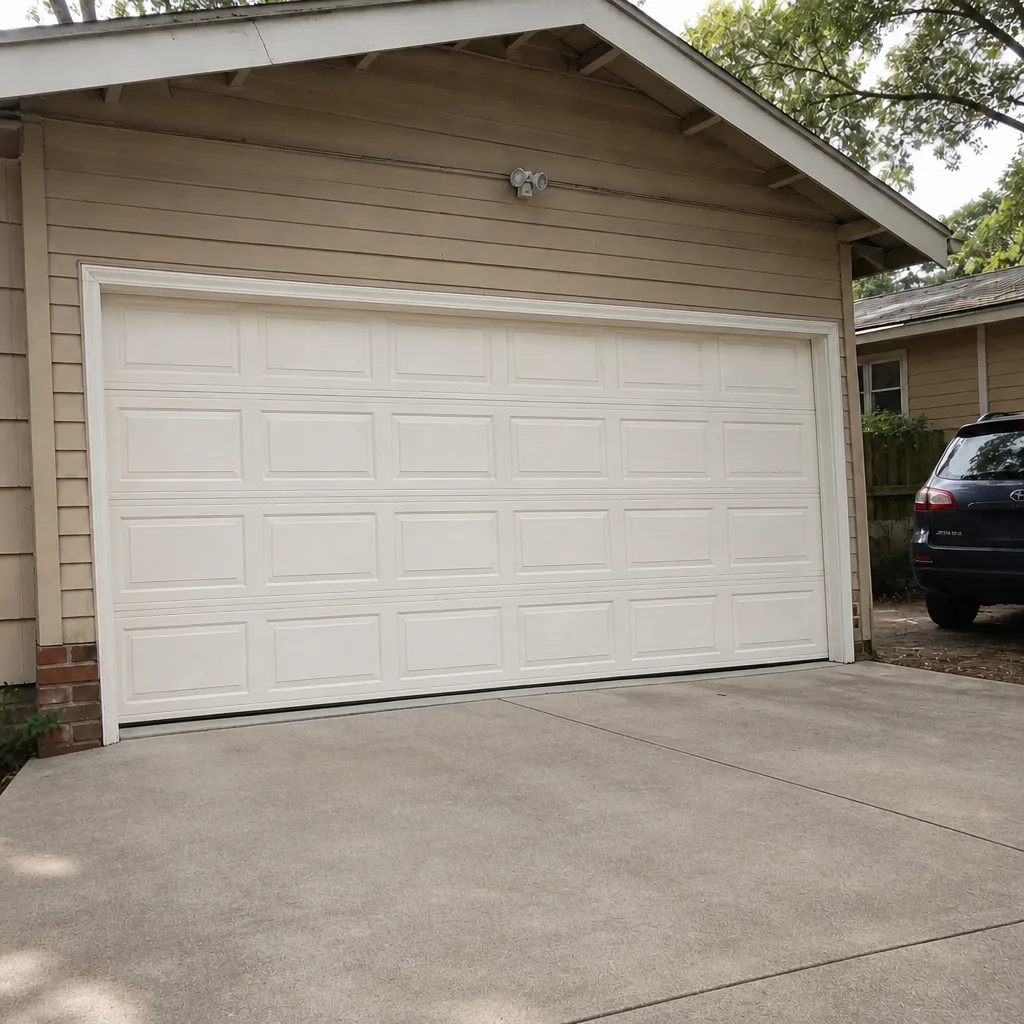 After
When to Call a Professional
Call a professional when the door itself is the risk. A snapped spring, a cable that’s slipped its drum, a door hanging off its track, or an opener that runs but doesn’t lift the door are all cases where pressure and tension make DIY dangerous. Call when the garage won’t secure your home, when a door is stuck open or stuck closed with a car trapped inside, or when an opener stops responding and you can’t tell whether it’s the motor, the sensors, or the smart module. Call when a repair keeps coming back, or when a door’s rusted-through panels make replacement the honest answer. For Midtown homeowners, Garage Door Repair Midtown offers free estimates in Midtown – call (833) 700-6163. The price is quoted and agreed before any work starts.
Frequently Asked Questions
A properly gauged steel door with a factory-applied finish and a good bottom seal performs best in Midtown’s humidity. Composite is a strong alternative for shaded alley garages. Wood overlay can work if it’s sealed and maintained, but solid wood tends to move and swell in this climate. Call (833) 700-6163 for a free estimate on the right door for your opening.
Repair when the door structure and finish are sound and the problem is mechanical – a spring, a roller, a track, or an opener. Replace when panels are rusted through, the door is the wrong size for the opening, or repeated repairs start costing more than a new door. A proper diagnosis settles it. Call (833) 700-6163 for an estimate.
Both are reliable choices, and they share engineering. LiftMaster generally targets the premium end with strong smart-home integration; Chamberlain offers a similar experience across a broader price range. Match the drive type to your garage – belt-drive for quiet operation in an attached garage. Call (833) 700-6163 and we’ll help you choose.
Installation involves high-tension springs, cables, and a door that can weigh well over a hundred pounds, and it’s a job for a trained technician. A door that’s the wrong size for the opening will fight the track from day one, and spring tension is genuinely dangerous. Call (833) 700-6163 for a free measure and a written estimate.
R-value is one part of the decision, not the whole thing. It measures resistance to heat flow in lab conditions, but a door’s real thermal performance depends on perimeter seals, the bottom threshold, and how well it fits the opening. A lower-rated door that seals tight often outperforms a higher-rated door with gaps.
Yes – we offer emergency garage door service for urgent failures like a snapped spring, a door off its tracks, or a car trapped inside. Call (833) 700-6163 as soon as the problem happens; the price is quoted and agreed before any work starts. New-door installation is measured, ordered, and scheduled rather than same-day.
Yes. Craftsman openers are common in Midtown garages, and we repair both legacy units and newer models. Older Craftsman openers often lack modern rolling-code security and smart features, so a connectivity-driven upgrade may mean replacement rather than repair. Call (833) 700-6163 for an honest recommendation.
The Bottom Line
Every garage door decision in Midtown comes back to the climate and the lot. Choose a material that survives Georgia humidity, measure your actual opening before you shop, and match the opener to how your garage is used. Read R-value as one factor, not the whole answer, and keep the bottom seal healthy. Repair what’s sound and replace what isn’t. Most of the failures we see come from buying for showroom looks rather than real conditions – and nearly all of them are avoidable. When in doubt, get a proper measure and a written estimate first. Call (833) 700-6163 for a free estimate.
Written by the team at Garage Door Repair Midtown.